


The growing need for "eco-plastic" solutions that recycle plastics as a resource.
It is now common knowledge that exporting plastic waste overseas has become significantly more difficult than before 2017, as Southeast Asian countries have successively followed suit with import restrictions, starting with China's waste import restrictions in 2017. In addition, the Basel Act (Act on the Regulation of Import and Export of Specified Hazardous Wastes, etc.) was amended in January 2021, making the export of plastic waste an even more challenging option.
In fact, Japan's exports of waste plastics, which amounted to 1.527 million tons in 2016, decreased to 821,000 tons in 2020, and are expected to decrease even further in 2021 due to the impact of the amendments to the Basel Convention.

As a result of these developments, plastic waste that was previously traded for profit and recycled overseas now has nowhere to go and is being processed domestically as industrial waste. Moreover, the Plastic Resource Recycling Law will come into effect next year, further increasing the importance of producer responsibility and extended producer responsibility. Naturally, the current situation is not desirable, and there is a growing need for "eco-plastic" recycling, which involves recycling plastic waste domestically and circulating it as a resource.
Current status of used film recycling
One of the items that has become difficult to export overseas due to the recent amendment to the Basel Convention is what is known as film bales. Film bales are made by compressing and packaging soft films, such as bags used for product packaging or stretch film used to prevent cargo from collapsing, into a cube shape.
The Ministry of the Environment's "Criteria for Determining Whether Plastics Export Subject to the Basel Convention" states that unused, non-market-circulated film bales discharged from the manufacturing process of products are exempt from regulation. However, used film bales must meet certain conditions, such as being free from contaminants like food, mud, oil, and rust. From a risk management and compliance standpoint, exporting them overseas is not necessarily advisable. Since the amendment of the Basel Convention, customs inspections have been strengthened, and if a customs inspection determines that the product cannot be exported, the company that discharged the product will be held responsible, and the cost it must pay will be substantial.
However, recycling used film domestically is not easy. Let's look at the recycling rate of polyethylene (PE), a resin commonly used in film products such as garbage bags and stretch film.

According to data from the Japan Plastics Recycling Association, the total amount of waste plastic generated in Japan in 2019 was 8.5 million tons, of which 2.99 million tons were PE (polyethylene). Of that, only 220,000 tons of PE were recycled, resulting in a recycling rate of only 7.4% for PE. While this data includes rigid PE such as bottles and containers, and therefore cannot be generalized, it suggests that only a small number of companies are able to recycle used film.
As a "plastic recycling production company," we at Pantech regularly propose plastic recycling solutions to many companies. However, even among environmentally conscious companies that have independently set environmental targets, not many have established a recycling scheme for used film. While some companies are already working on this, they are still in the minority.
As mentioned in a previous post, Co-op Chugoku Shikoku Business Federation (Co-op CS Net), a consumer cooperative federation, has established and is operating a closed-loop system in which they create sanitary bags from used film for their own use. Considering the above circumstances, you can see just how advanced Co-op CS Net's initiatives are.
Recycling used film hinges on domestic processing of recycled materials.
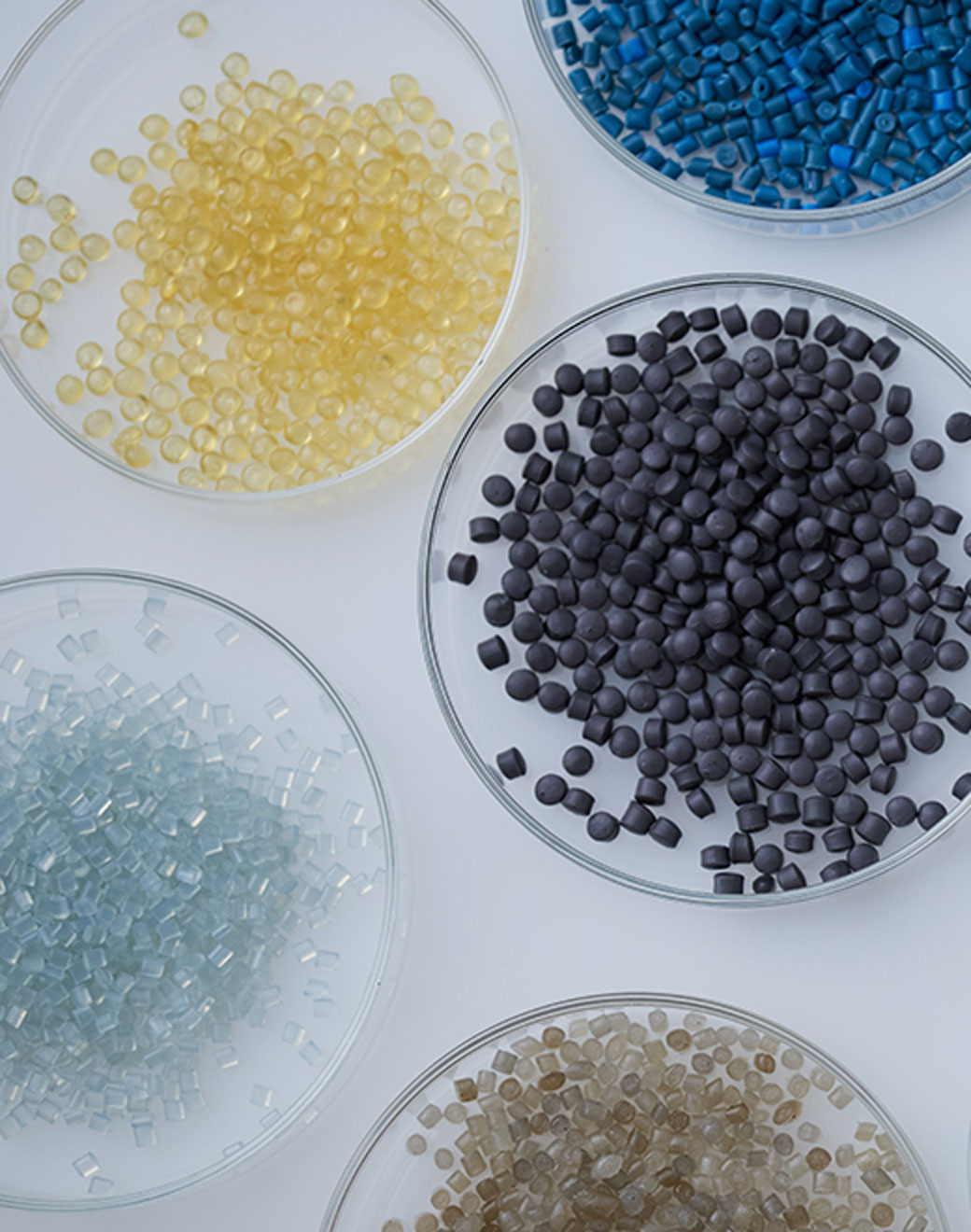
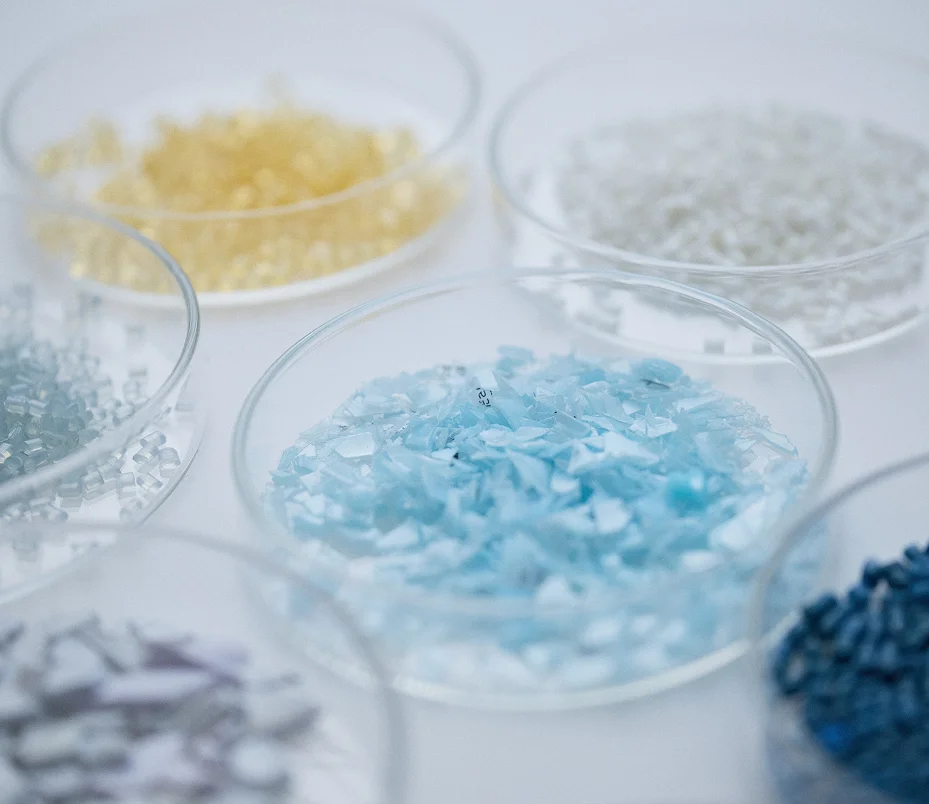
Pantech , from a risk management and compliance perspective, we do not recommend exporting used film directly overseas. This does not apply to items that have undergone thorough quality control and have been assessed as having no risk of violating the Basel Convention, but generally, used film is processed into recycled raw materials (repellets) domestically before being manufactured into products by inflation manufacturers in Japan or overseas.
As with Co-op CS Net, we can create a closed-loop system by returning the final product made from used film to the source of the waste, or we can sell the recycled raw materials to film manufacturers both domestically and internationally. We support the creation of recycling schemes that meet the needs of waste-generating companies. Furthermore, by processing the recycled raw materials (into pellet form), they are exempt from the regulations of the Basel Convention, making it possible to export them overseas without any problems.
In any case, with the increasing difficulty of exporting used film bales as they are, how to process them into recycled materials domestically is of paramount importance for establishing a recycling scheme that complies with the law.
Pantech , we entrust the processing of recycled materials to multiple domestic partners to produce high-quality recycled plastic raw materials.

Three factors hindering domestic recycling of used film

With SDGs and ESG being emphasized and the green shift progressing, companies that use flexible films such as bags for product packaging and stretch film to prevent cargo collapse will likely be questioned as part of their corporate social responsibility whether they recycle these materials instead of using them as single-use (disposable) items.
It's often said that "mixing them together makes them garbage, separating them makes them resources," but when it comes to plastics, no matter how much you separate them, some materials cannot be recycled. However, flexible films are often composed of a single resin and are relatively easy to recycle.
So why isn't recycling progressing? The following three factors are likely the main reasons:
- Not suitable for sorting
PE (polyethylene) is a common material used for film products such as garbage bags and stretch film, but bags used for product packaging are also made of PP (polypropylene), PET (polyethylene terephthalate), and PVC (polyvinyl chloride). Needless to say, PE, PP, PET, and PVC are all different resins, so they must be separated for recycling. In addition, even within PE, there are HDPE (high-density polyethylene) and LDPE (low-density polyethylene), so these must be separated. Furthermore, seals, labels, and paper are also considered foreign matter and should be removed.
Often, recycling becomes impossible because sorting is not possible due to a lack of knowledge about the type of resin used, or because operational rules prioritize work efficiency.
It's also effective to take measures to eliminate the need for sorting altogether, such as limiting the items collected to only stretch film, or standardizing the film material used to LDPE. "Mixing them makes them garbage, separating them makes them resources," so let's start by thoroughly sorting. Pantech , we provide support for recycling implementation, including sorting guidance, circular design, and operational improvements.- Poor transportation efficiency
Transportation efficiency is also a crucial factor for recycling. Regardless of whether it's plastic or another material, recycling requires transport to a recycling plant. If the weight of the cargo is light compared to the truck's maximum load capacity, transportation costs will be high, directly leading to increased recycling costs.
Simply having a small amount of waste, or even just using uncompressed film, can lead to poor transportation efficiency. Therefore, it's necessary to take measures such as devising collection methods to ensure sufficient weight or introducing compression balers. You might be worried about the initial investment when introducing equipment, but by introducing equipment with the optimal specifications according to the amount of waste, it's possible to amortize it in a short period of time. In cases where we have assisted companies, some have generated cost benefits that exceeded their initial investment in just three months, and have even been able to hire staff dedicated to compression baling.
In particular, with film recycling, the final product often has a low unit price, so minimizing recycling costs, including transportation fees, is especially important. If you are interested, please feel free to contact us.- There are few companies that can handle the recycling of used film.
When recycling used film, it is first necessary to process it into recycled raw materials (repellets), but there are not many factories in Japan that can perform this processing. Moreover, even if it is possible to recycle the film into recycled raw materials, there are currently only a limited number of manufacturers that can use these recycled materials to produce products.
It may surprise you, but there are quite a few film manufacturers that have only ever used virgin raw materials. As you might imagine, recycled raw materials are of lower quality than virgin raw materials. They may contain foreign matter or different resins, and their physical properties are less stable. As a result, molding becomes more difficult, and it can lead to a decline in the quality of the final product. Recycled raw materials are far more difficult to handle than virgin raw materials, and molding them requires a high level of technical skill.
As mentioned earlier, until China imposed import restrictions on waste in 2017, the majority of domestic film bales were exported overseas and recycled there, so there wasn't much demand for film recycling within Japan. As a result, companies capable of recycling and manufacturing products from film have not developed in Japan, leading to the current situation.
Furthermore, each stage from collection to recycled material processing and final product manufacturing is specialized, making it difficult to operate a seamless recycling scheme. In other words, there are only a limited number of companies that can propose a closed-loop solution to waste-generating companies. In this respect, Pantech has partner companies throughout Japan for each stage, allowing us to provide a one-stop solution.

The risks lurking behind the choice not to recycle
Despite the challenges mentioned above, used film is materially suitable for recycling, and recycling methods are well-established, making it one of the easiest used items to implement a closed-loop system for. However, in reality, many companies do not choose to recycle used film.
Why is that? The reason can be summed up in one word: "lack of decision-making." Implementing a recycling scheme would allow for the sale of used film that was previously treated as industrial waste, but it would also necessitate changes to on-site operations and, in some cases, require initial investment in equipment.
In other words, I believe that the burden of work and the financial costs involved are bottlenecks preventing companies from taking the first step towards building a closed-loop system for used film products.
While the desire to avoid burdening the environment is understandable, given current social trends and the state of the global environment, it is certainly not a choice that will be supported. Avoiding burden may be a good choice in the short term. However, if it results in a burden on the global environment, then it is necessary to understand that such a choice carries the risk of damaging the value of the company and brand. In reality, companies that disregard the environment are facing consumer and customer attrition, withdrawal of investment, and some have even been driven into crisis or bankruptcy.
"Is your company able to recycle used film products?"
If this hasn't been done yet, perhaps it would be a good idea to reconsider establishing a closed-loop system for used film products before the Plastic Resource Recycling Law comes into effect next year.
As a "Recycling Plastic Production Company," we at Pantech support your company's plastic resource recycling efforts.