
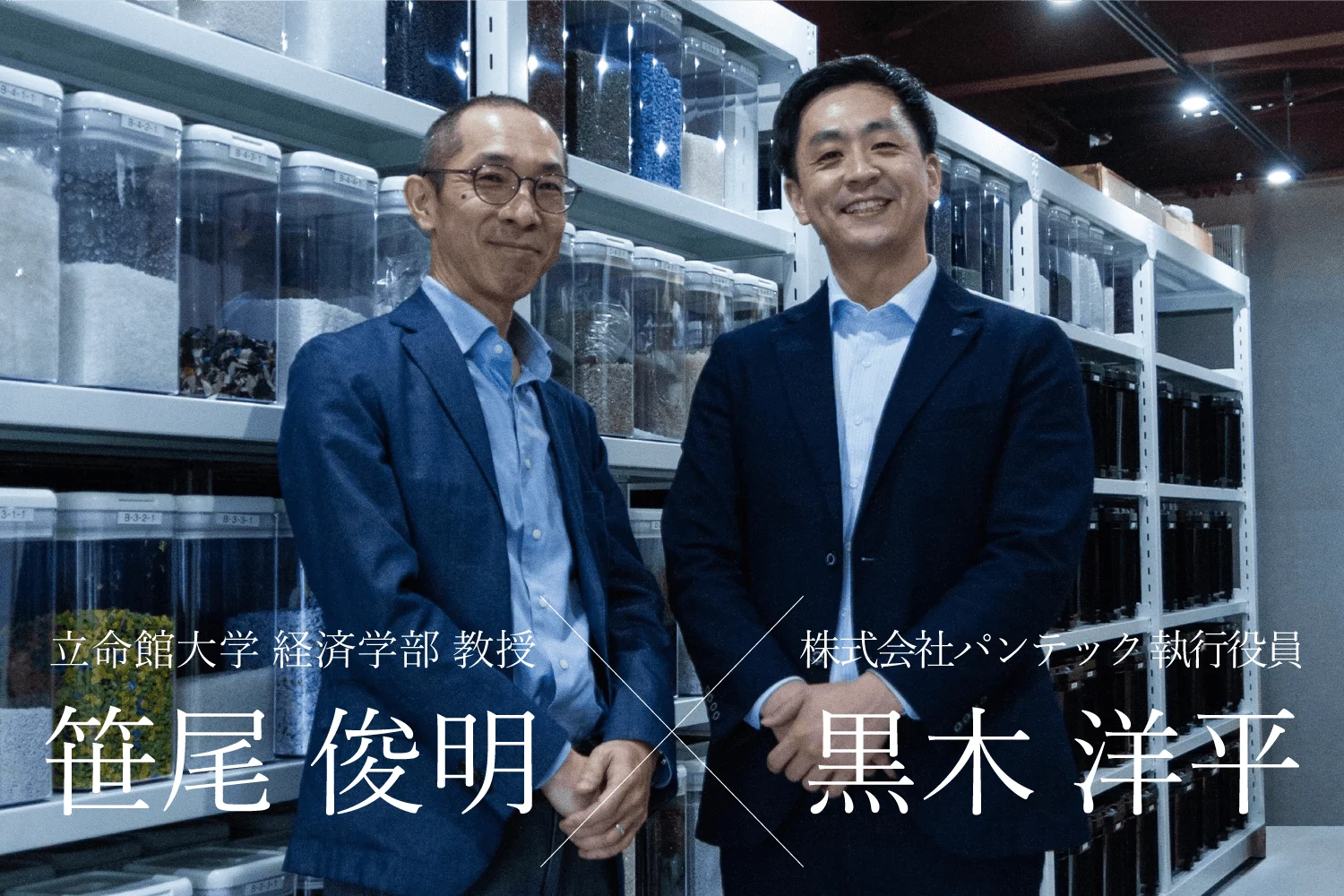
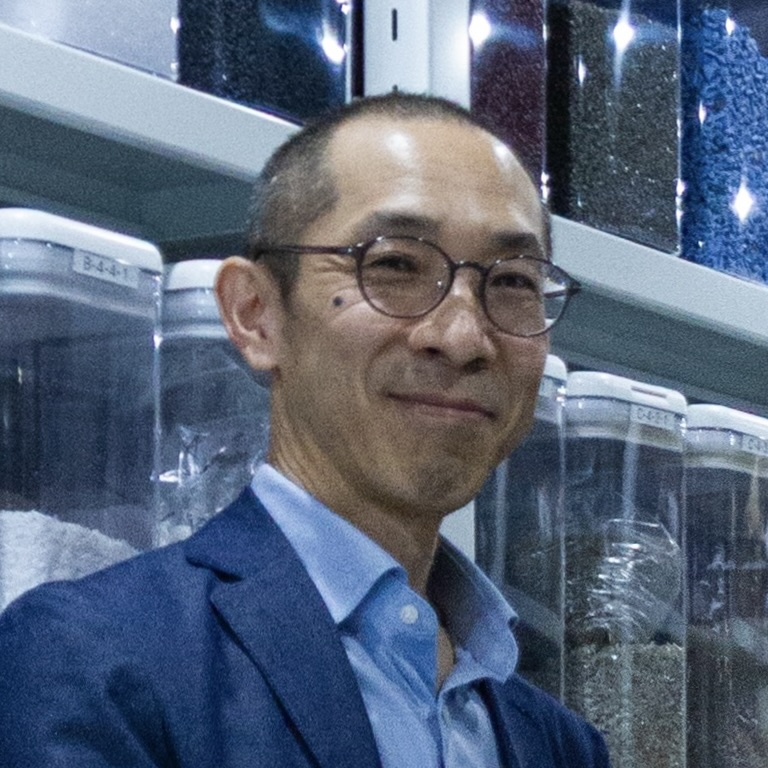
Toshiaki Sasao
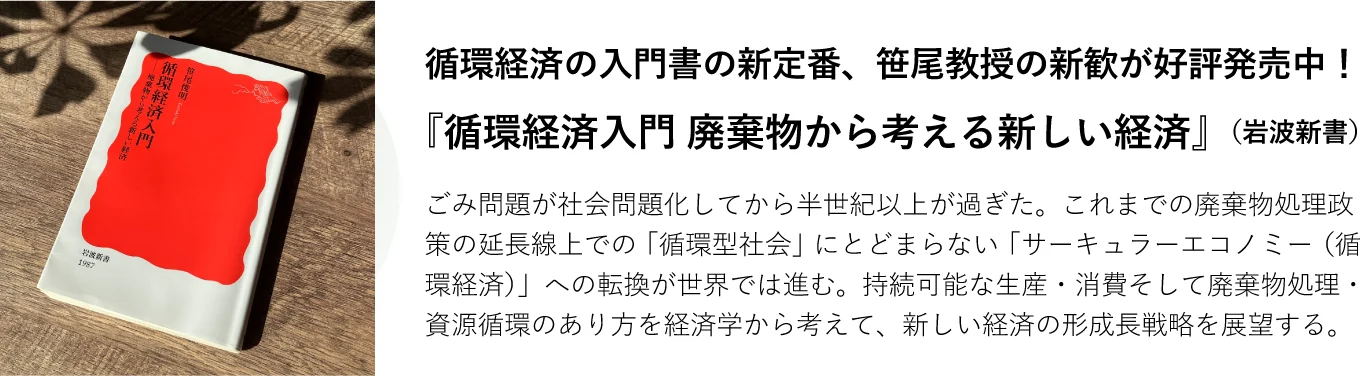
Professor of Economics at Ritsumeikan University. He previously served as a professor in the Faculty of Humanities and Social Sciences at Iwate University before assuming his current position in 2021. His specialization is environmental economics. He has extensive experience giving lectures at companies and organizations. His recent book, "Introduction to the Circular Economy: A New Economy from the Perspective of Waste" (Iwanami Shinsho), is currently on sale and receiving positive reviews.
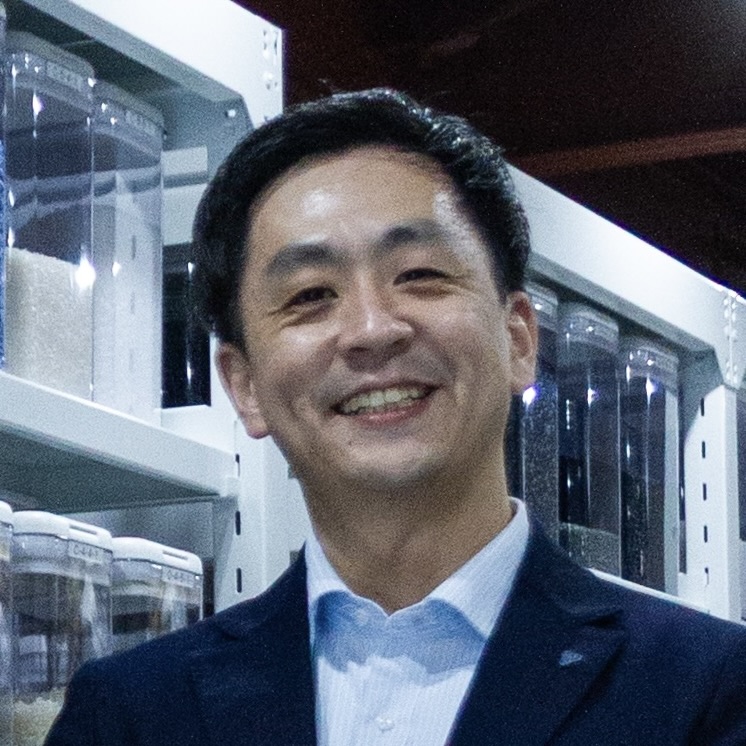
Yohei Kuroki
Executive Officer and Head of the Circular Economy Promotion Department at Pantech Co., Ltd. / Editor-in-Chief of "Market Report". After joining the company in 2013, he belonged to the Overseas Sales Department, visited recycling sites in various countries, and became well-versed in overseas recycling conditions.
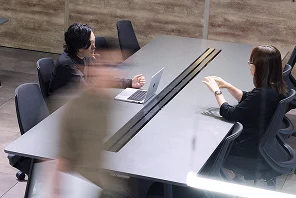
"Division" hinders the recycling of plastic resources.
- Kuroki
Thank you so much for agreeing to this interview. I am very honored to have this opportunity to speak with Professor Sasao. I look forward to today's discussion.
First, could you briefly explain your area of expertise, "environmental economics," Professor Sasao?- Professor Sasao
Yes, environmental economics is a very broad field, but simply put, its main theme is to consider how to achieve both "environmental conservation" and "economic development."
- Kuroki
What kind of research are you specifically doing?
- Professor Sasao
To give a simple example, we conduct research that analyzes the effects of charging for waste disposal on reducing waste volume and promoting recycling using actual data. We also work on research that evaluates "invisible costs" by quantitatively analyzing the negative impact of so-called "neighborhood nuisance facilities" such as waste disposal sites that people don't want built near their homes. In the case of waste from ordinary households, it is often processed cheaply or for free, so at first glance, some people may think that there are not many costs involved. However, when you include the costs of incineration and landfill, as well as the environmental burden from the operation of the facilities and the decrease in land values near the waste disposal sites, it becomes clear that the actual costs are not insignificant. This reveals the economic advantages of recycling, as Pantech is doing, and we are also conducting research on such topics.
- Kuroki
As we promote plastic recycling, we also focus on economic, social, and environmental aspects in our daily work, so I found the analysis of the "invisible costs" involved in waste disposal and recycling to be very interesting. When it comes to plastic recycling, I feel that "connecting the fragmented information" is a very big challenge.
- Professor Sasao
In order to promote resource recycling, matching the "reverse" industries, such as waste disposal companies and recyclers, with the "arterial" industries, such as manufacturing, is essential. As you said, until now, the reverse industries have not had sufficient information on where and what kind of recycled plastic raw materials are available and how much demand there is for them, and the arterial industries, even if they wanted recycled plastic raw materials, did not know where to procure them. In this context, we recognize that your company is playing a very important role in connecting buyers and sellers of recycled resources, which is truly the foundation of the circular economy. In order to further promote resource recycling in the future, companies that can play a role like yours will become increasingly important, but there are not many companies that can do that. This can also be said to be one of the factors that creates a divide between the arterial and reverse industries.
- Kuroki
In 2023, we established the Circular Design Center, and we are working to use data to bridge the gap between the supply and demand for recycled resources. We are still only halfway there, but we hope to become a hub that connects fragmented information and disparate players.
Incentives to overcome the "status quo bias"
- Kuroki
While companies and governments are aware of the costs involved in recycling, there are many cases where they want to recycle but economic feasibility is a bottleneck preventing progress. We are constantly grappling with how to overcome this and transition to a circular economy.
- Professor Sasao
This is a very difficult topic. One reason why it's hard to change the current situation is the fear that changing the way things are done will increase costs. Also, if there are no particular problems, people tend to think that it's easier and less troublesome to keep things as they are.
In the fields of circular economy and recycling, I believe that both waste generators and recycled material buyers are subject to a certain degree of status quo bias. In other words, for waste generators, conventional disposal methods have become the default, and the costs of these methods are kept low. In contrast, recycling involves additional costs such as the effort and labor involved in finding a contractor, so without some kind of incentive to encourage it, there is little motivation to actively pursue it. I think the factors that make it difficult for waste generators to promote recycling lie in these aspects of cost and effort.
On the other hand, those purchasing recycled materials naturally have concerns about quality. Recycled materials are often of lower quality than virgin materials, and many manufacturers seem to have concerns about their stability and moldability. In addition, the lack of incentives for recycling is also a major factor hindering the adoption of recycled materials.- Kuroki
Indeed, it seems that many companies tend to avoid change and risk and maintain the current options. One way to overcome this status quo bias is through incentive design. In consumer-oriented initiatives, efforts to increase plastic recycling rates by providing incentives such as deposit systems and point rewards are becoming quite widespread. On the other hand, for businesses, especially those that generate waste, converting waste into valuable materials—that is, selling it as a resource—can reduce processing costs and improve recycling rates, which can be a trigger for behavioral change. However, regarding the use of recycled materials, while not an incentive, stricter legal regulations may also act as a trigger.
- Professor Sasao
That's right. There are movements, mainly in the EU, to mandate the use of recycled materials, such as the ELV (End-of-Life Vehicle) Directive and the mandatory use of recycled materials in packaging. I think companies operating in Japan also need to keep a close eye on how global companies will respond to this. The demand for recycled materials will undoubtedly increase from now on, but if excess demand continues, it is possible that materials that were previously considered worthless and were discarded due to the relationship between supply and demand may come to be treated as valuable materials, and the demand for domestic recycling will likely become even stronger.
What is required of each player in realizing a circular economy?
- Kuroki
We've discussed various challenges in recycling, and I'd like to hear your opinion on what actions the government, businesses, and citizens should take going forward.
- Professor Sasao
First, regarding the government, only the government can crack down on improper disposal such as illegal dumping, so government involvement is essential to keep the recycling industry healthy. On the other hand, government regulations can sometimes be an obstacle for those who are looking to expand circular businesses, so I think it is also important to relax regulations as needed. In short, the government needs to actively work to build the foundation so that the circular economy can grow properly.
Regarding the role of companies, if we focus on the reverse recycling sector, it seems that they are required to understand the needs of consumers of recycled resources and then improve their recycling technologies. In the arterial recycling sector, currently, "using recycled materials" does not add significant value. Therefore, "how to add value" becomes important. For example, one way to do this is to market products by creating a story about what kind of recycled materials are used in them.
For citizens, the first step should be to ensure they properly separate and dispose of their waste according to local government rules, and then to understand how it is processed. At the same time, we hope they will support circular economy initiatives by actively using environmentally friendly products and services, such as those made from recycled materials. In transitioning to a circular economy, perhaps the most important thing right now is to change consumer mindsets, so that they understand the overall picture of the cycle and realize the importance of choosing recycled products.- Kuroki
In order to realize an optimal resource-recycling economy, I am also concerned about how to address the gap between the "ideal" and "reality." Many companies aim to differentiate themselves and establish a competitive advantage, and tend to focus on their own internal initiatives, often failing to consider the optimization of society as a whole. I believe it is necessary to have a thorough discussion about the ideal form of a circular economy in Japan before overcoming the current challenges.
- Professor Sasao
In terms of an ideal circular economy, Europe, particularly the EU, has made considerable progress at the conceptual level, and Japan is at the stage of beginning to adopt similar ideas while observing them. In bridging the gap between "ideal" and "reality," the "Porter hypothesis" can be helpful. This hypothesis states that appropriate environmental regulations encourage corporate efficiency and technological innovation, leading to the acquisition of a competitive advantage in the market.
For example, in the 1970s in the United States, stricter emissions regulations led many automakers to face increased costs. At the time, Japanese cars were not exported in the same volume as they are today, but Honda was quick to adapt to these regulations. By producing small, fuel-efficient cars that also met emissions standards, they expanded their market share, and this served as a breakthrough for Japanese cars to spread throughout the global market. I believe a similar principle applies to the field of circular economy. If we are unwilling to make efforts to bring reality closer to the ideal now, we risk losing market confidence in the medium to long term.- Kuroki
While various discussions and confusions will undoubtedly arise in the future due to changes in regulations, treaties, and policies concerning resource recycling, I believe the movement towards carbon-free and circular economies will not stop. I feel that it is a responsibility for all of humanity to confront the theme of the "circular economy" while pooling our opinions as we live in the present.
Professor Sasao, thank you very much for sharing your valuable insights today.- Professor Sasao
Thank you very much as well.