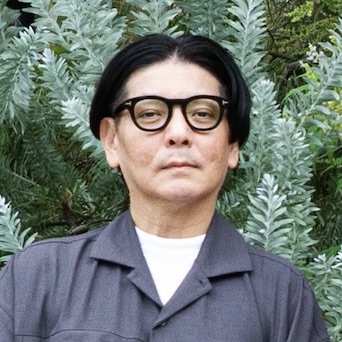
Toshiya Goto
Graduated from Tokyo Metropolitan University of Industrial Technology. Researcher at the Healthcare Design Institute of the same university. Promotes business development and design management with a focus on branding and circular design. Also gives guest lectures at universities and corporate presentations. Active in various fields, including as the representative of JGLproducts, a director of TRIFE DESIGN, and participation in the ECDC business unit.<br />

Satoshi Ono
Head of Marketing Department / Section Chief of Circular Economy Promotion Department, Pantech Co., Ltd. After working as an urban development planner, he joined Pantech Co., Ltd. in 2020. In addition to overseeing marketing, PR, and design work, he is involved in numerous collaborative projects with various industries, including the construction and operation support of plastic resource recycling schemes, the development and provision of environmentally friendly products.
From open-loop to closed-loop
- Ohno
In 2021, Pantech established a Circular Economy Promotion Department, which develops a business that collects unwanted plastics, recycles them into raw materials, transforms them into products, and returns them to the companies that generate the waste. In recent years, we have received many inquiries from companies that want to build a closed-loop scheme to circulate materials that were previously treated as waste by transforming them into products within their own company.
In the context of plastic resource recycling, the open-loop model is common, where resources discharged from a company are sold to recyclers or recycled into raw materials for use by other companies. This is unlikely to change in the future, but on the other hand, there seems to be a growing need for a closed-loop model, where companies reuse the materials they discharge themselves.
I imagine Mr. Goto receives many inquiries regarding closed-loop systems.- Goto
Yes, we receive many inquiries from companies wanting to utilize discarded materials or dead stock products. I think the number of companies interested in closed-loop systems is definitely increasing.
While this trend can be seen as a sign of the progress towards a circular economy, I am concerned that many of these projects are one-offs. Although many companies want to utilize their waste materials rather than discard them, I think there are still few companies that are conscious of sustainability and business viability.
While such initiatives are certainly meaningful even as one-off projects, if the goal is to transition to a circular economy, it's crucial to integrate closed-loop systems into the business and build a system that allows for continuous operation, rather than letting them end as one-offs.- Ohno
Indeed, the perspective of how to incorporate a closed loop into business operations is crucial. While the concept of the circular economy has become quite widespread, it is still in the exploratory stage, and even looking broadly across industries and society, examples of closed loops are limited. Therefore, it seems inevitable that at this point there are many one-off initiatives with a strong emphasis on PoC (proof of concept) or trials, but it is important not to let them end as one-off, temporary efforts, but to update these initiatives step by step with a view to the medium to long term.
There is a lack of circular design.
- Goto
But in reality, there are many materials that cannot be recycled into raw materials.
- Ohno
There are indeed many such materials. Pantech has been involved in the material recycling of many plastics, and we have experience with composite materials such as multilayer films and aluminum-coated materials, which are generally considered difficult to recycle, so we are confident in our ability to handle them. However, the reality is that there are still many materials that cannot be recycled. One of the reasons why 3/4 of the plastic waste generated in Japan is not recycled may be that the products were not designed with recycling in mind in the first place.
In Japan, the so-called "Plastic Resource Recycling Law" was enacted in 2022, and at the same time, the "Design Guidelines for Plastic Products" were implemented to encourage manufacturers of plastic products to consider the environment from the design stage. However, since these guidelines are not legally binding, it seems that they are not being given much attention in manufacturing facilities.- Goto
Concepts such as "circular design," "DfE (Design for Environment)," and "ecodesign," which refer to environmentally conscious design, are being promoted by the government, academia, and some pioneering companies, but in Japan, they are still far from gaining widespread acceptance compared to Europe and the United States.
- Ohno
Circular design is still considered an alternative, but if it becomes mainstream, it could bring about significant changes in how resources are recycled.
- Goto
If the concept of circular design becomes widespread, environmental considerations and circularity will be given to products as much as their functionality and aesthetics, and the selection of materials and product design during manufacturing will change. As a result, the use of materials that are difficult to recycle, such as composite materials and materials with metal inserts, will naturally decrease, and the possibilities for resource recycling will expand even further. That being said, it seems that it will be a while before circular design is actually implemented in manufacturing.
- Ohno
That's right. While the "Design Guidelines for Plastic Products" do mention things like monomaterialization and facilitating disassembly and separation, product design isn't something that can be easily changed, and the transition would require a lot of time and money.
- Goto
In this era of mass production, mass consumption, and mass disposal, manufacturers and retailers are now required to uphold extended producer responsibility, extending their scope of responsibility to include the disposal and recycling stages after product production. Considering this, it seems that manufacturers and retailers must address these issues as part of their responsibility, even if it takes time and money.
Designing resource circulation itself, going beyond circular design.

- Ohno
While circular design is undoubtedly an important element in promoting resource recycling, I believe that circular design alone is insufficient to achieve sustainable resource recycling.
- Goto
It's true that environmentally conscious product design often seems to be heavily influenced by the perspective of the "arterial" industries (the industries that supply and distribute goods and services), and doesn't seem to incorporate much of the perspective of the "venous" industries (the industries that supply and distribute goods and services). If we're going to consider how to collect used products, recycle them, and transform them into new products, then we need to incorporate the perspective of the venous industries.
- Ohno
You're absolutely right. It's often said that collaboration between arteries and veins is crucial for realizing a circular economy, but if we're going to design not only the product itself, but also the process from product collection after use to remanufacturing, then it seems there's no other way than for arterial and venous industries to collaborate and co-create a circular scheme.
Resource recycling can be described as continuing manufacturing by mutually exchanging resources between arterial and venous industries. However, to achieve this, circular design from the perspective of arterial industries alone is insufficient; product design and the construction of resource recycling flows must take into account venous processes such as collection and recycling. Without this, when it comes to actually implementing resource recycling, problems will inevitably arise somewhere, resulting in the disruption of the supply chain.- Goto
To begin with, essential considerations for resource recycling include determining what materials and conditions are recyclable, methods for collecting and efficiently transporting used products, and where and how to recycle them. Furthermore, implementing such a scheme requires compliance checks beforehand, which demands considerable specialized knowledge and experience, making it difficult for the arterial industries alone to handle these matters.
- Ohno
To design resource recycling itself, it's necessary to have a precise understanding of both the arterial and venous logic, but I doubt there are many people in all of Japan who can do that. That's why, in order to realize sustainable resource recycling, I believe it's essential for the arterial industry, which is focused on manufacturing final products, and the venous industry, which specializes in collection and recycling raw materials, to form a partnership.
- Goto
I think there are many people who work under the title of "designer," but many of them, whether graphic designers or spatial designers, limit themselves to a specific area of expertise. If we consider design that specializes in such areas as "design in the narrow sense," then I think that design related to resource recycling can be called "design in the broad sense."
While "design in a broad sense" may include "design management," which attempts to extend design-based approaches to areas such as business management, resource recycling design is a distinct field. Even creators, consultants, and academics who excel in design management may find resource recycling design challenging. Even if they can create a strategy by surveying and analyzing the market, selecting the optimal partner and building a scheme that actually works is extremely difficult.
Designing resource recycling is something that's not taught in design education, nor are there any students who learn it. It's not something you can do just because you have an MBA or MFA. I think you really can only acquire it through practical experience.- Ohno
I also changed jobs and came to this industry, but the optimal solution changes depending on the resin, area, shape, etc., and the process is subdivided and the supply chain is complex, so I struggled to catch up. I'm still learning, but trial and error is taking place all over the world to realize a circular economy, so it's really tough having to absorb new information every day (laughs). Designing resource recycling cannot be done on the reverse side alone, and I strongly feel that it cannot be realized without a strong partnership between the arterial and reverse industries.
What is necessary to realize arteriovenous collaboration?
- Goto
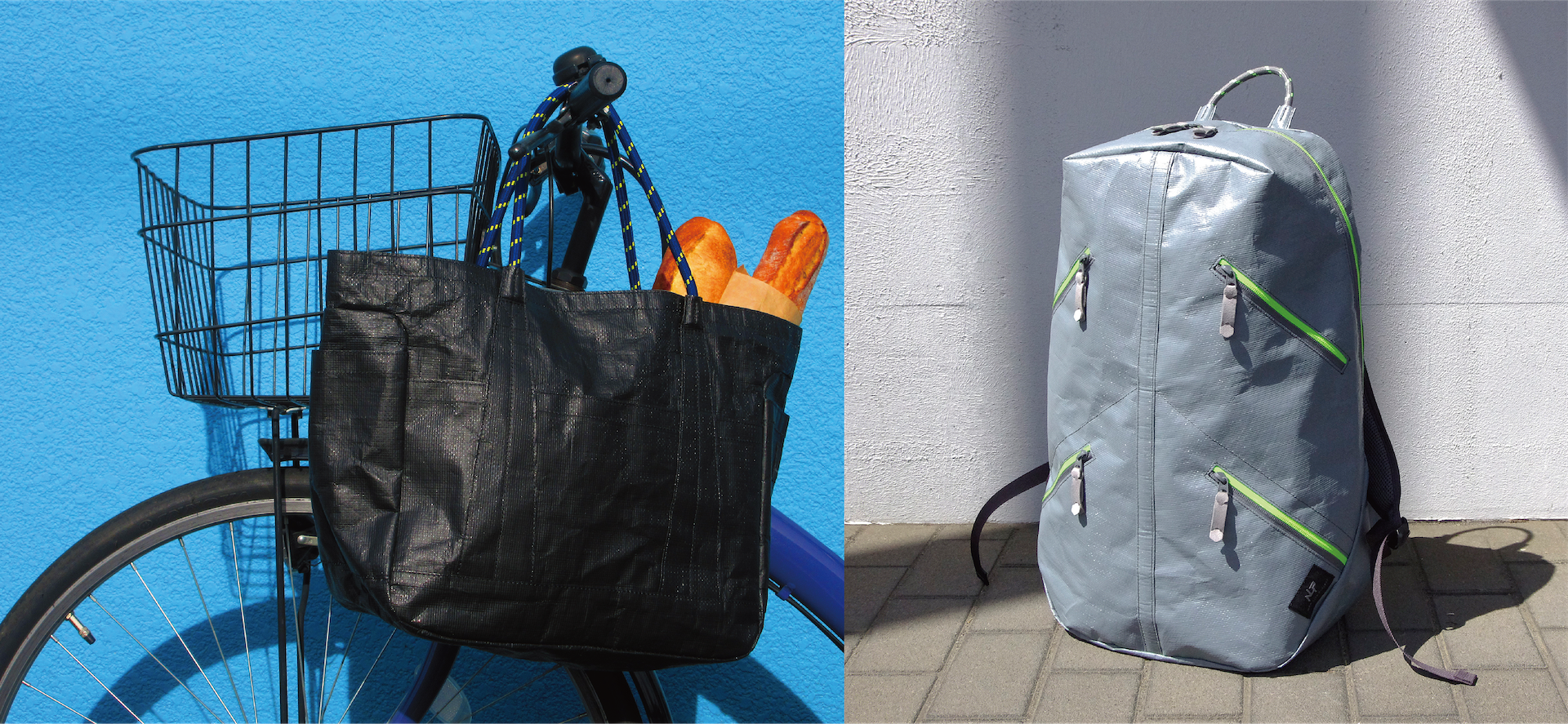
"ReTA BASE,"* a project we're working on with Pantech , isn't a closed-loop system, but it could be considered an example of arteriovenous collaboration. Pantech handles the collection of unwanted plastics and their recycling into raw materials, we jointly develop the fabric, and TRIFE DESIGN handles the manufacturing and distribution of the final product. I believe this project was only possible because Pantech directed the venous side and TRIFE DESIGN directed the arterial side.
"ReTA BASE"* | A plastic resource recycling-promoting upcycling brand/project co-created by TRIFE DESIGN Co., Ltd. and Pantech Co., Ltd. It develops lifestyle goods, mainly bags. A key feature is that it has established a complete supply chain in Japan, from the collection of unwanted plastics to their recycling into raw materials, product manufacturing, distribution, and sales.
- Ohno
Since its launch in 2021, "ReTA BASE" has expanded its product lineup, and thankfully, the number of stores carrying our products has steadily increased. In the apparel industry, where trends come and go so easily, what are your thoughts, Mr. Goto, on why "ReTA BASE" has been able to continue its business in this way?
- Goto
First, I think it's important that Pantech and TRIFE DESIGN have built an equal relationship. Being able to work together on an equal footing rather than a hierarchical one is a big advantage. And I think the fact that their values align is also a crucial factor.
- Ohno
Although we're in different industries, we both originally shared the desire to create products that are resource-recycling. I believe it took less than a year from the initial planning stage of "ReTA BASE" to the brand launch, and I think that's because our values aligned, allowing our discussions to click and the project to progress smoothly.
Mr. Goto actually visited the recycling site, which helped him deepen his understanding of the processes on the reverse side, from collection to recycled raw materials. I also learned a great deal about the logic on the reverse side, how to create the final product, while working on the project with Mr. Goto. I believe this process of deepening mutual understanding is truly important.- Goto
When different industries collaborate, I believe time is needed to deepen mutual understanding. At TRIFE DESIGN, we actively collaborate with other industries, but what is commonplace in one industry is often not commonplace for people in another. If we proceed without deepening mutual understanding, intentions and expectations will not be properly conveyed, and communication costs will be unnecessarily high. Moreover, it is difficult for things to go well unless the relationship is on equal footing.
- Ohno
In terms of the arterial and venous industries, the business model is such that the arterial side commissions work and the venous side accepts it, so the venous side is in a weaker position. As the demand for recycled plastic raw materials increases and the concept of extended producer responsibility is raised, this structure and relationship are starting to change somewhat, but it will probably take a little more time before they become equals.
- Goto
Also, I think it's important to clearly define how project outcomes will be perceived beforehand.
- Ohno
It all comes down to how you perceive the economic aspects. With "ReTA BASE," we're generating sales and profits through product sales, so I think that can be considered a success of the project. However, both our company and TRIFE DESIGN see value in this initiative beyond these visible economic benefits, and if there's a mismatch in that perception, it certainly seems like it could risk failing.
- Goto
While generating sales and profits is important when developing a business, these kinds of projects also have an aspect of upfront investment, don't they? Through these efforts, knowledge is accumulated, networks are expanded, and branding is built, so I think it's important to consider the formation of these so-called intangible assets from a medium- to long-term perspective as also being an achievement. I don't think economic benefits are simply about monetization, but as Mr. Ohno said, if there's a misunderstanding here, I think collaboration won't go well.
- Ohno
In that sense, it might be easier for small and medium-sized enterprises (SMEs) to collaborate than for large corporations. Large corporations, for better or for worse, have their organizations subdivided by function, but in order to realize resource recycling, I think that collaboration between internal departments is extremely important, even before collaboration with external parties. It depends on the scale of the project, but departments such as those in charge of environment and sustainability, as well as planning, research and development, design, manufacturing, quality control, and public relations are all involved in resource recycling, and involving other departments seems to be a hurdle for large corporations to tackle such projects.
- Goto
It's true that small and medium-sized enterprises (SMEs) may be more agile. That's certainly the case with "ReTA BASE." If those with authority, such as project managers and decision-makers, are involved and there's agreement on the project's direction and objectives, I think even large corporations can move forward with speed.
Transform the manufacturing ecosystem into a circular one.

- Ohno
The importance of plastic resource recycling within Japan has been pointed out in various places, and companies are in the process of taking action, but in reality, Japan's material recycling rate is not increasing, and 70% of recycled resources are still exported overseas. I think that in order to transition to a circular economy, it is necessary to re-examine the social system from the ground up.
- Goto
Beyond the circular design of environmentally conscious product design that we discussed today, it's essential that designing resource circulation through the integration of arteries and veins becomes commonplace. While accumulating small examples like "ReTA BASE" is certainly important, the most impactful approach might be to implement legally binding rules, like those in the EU.
- Ohno
Given the past history, it seems unlikely that Japan will take such an approach, but even EU regulations will affect Japanese companies. The proposed ELV regulations and PPWR are prime examples of this. We expect these to accelerate the green shift among Japanese companies, and indeed, many companies are taking action, and thankfully, we have received many inquiries.
I think that large corporations are currently at the center of this trend, but the actions of large corporations also affect suppliers, and as a result, I believe it will lead to a shift in Japan's manufacturing ecosystem towards a circular economy.- Goto
Designing resource recycling is no easy task, but it's a challenge that companies must address from a compliance standpoint and to fulfill their extended producer responsibility. Beyond "ReTA BASE," we want to continue co-creating model cases in various industries and fields.
- Ohno
Thank you very much, and I look forward to working with you in the future. Thank you for today.