
Case Summary
Founded by board members from the apparel industry, TRIFE DESIGN Inc. (hereinafter referred to as TRIFE DESIGN) aims for a circular economy-style approach to manufacturing, driven by concerns about the high rate of imports of apparel products from overseas, the resulting decline of domestic factories and craftsmen, and the environmental impact of the apparel industry. They launched their own brand, "New Life Project" (hereinafter referred to as NLP).
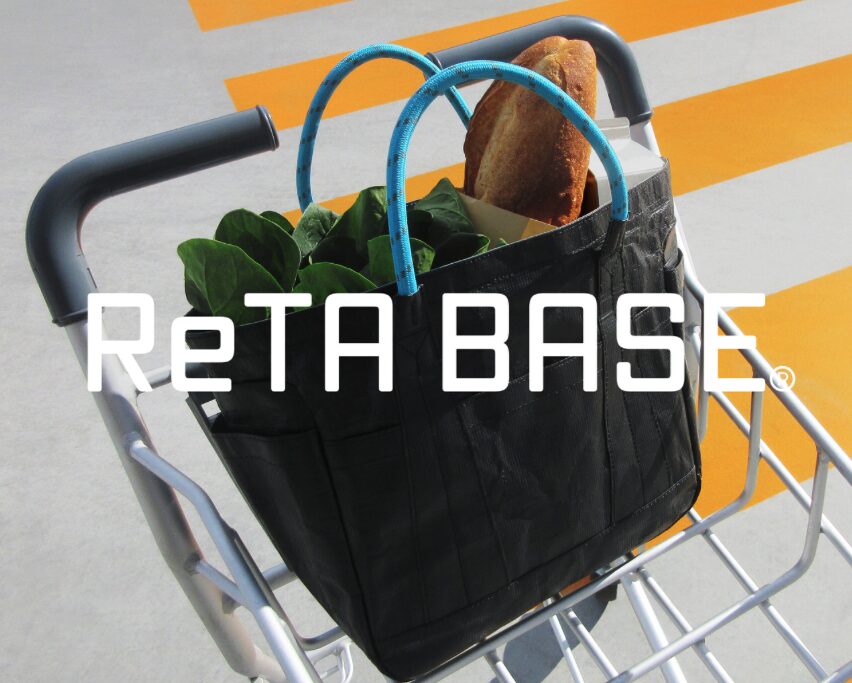
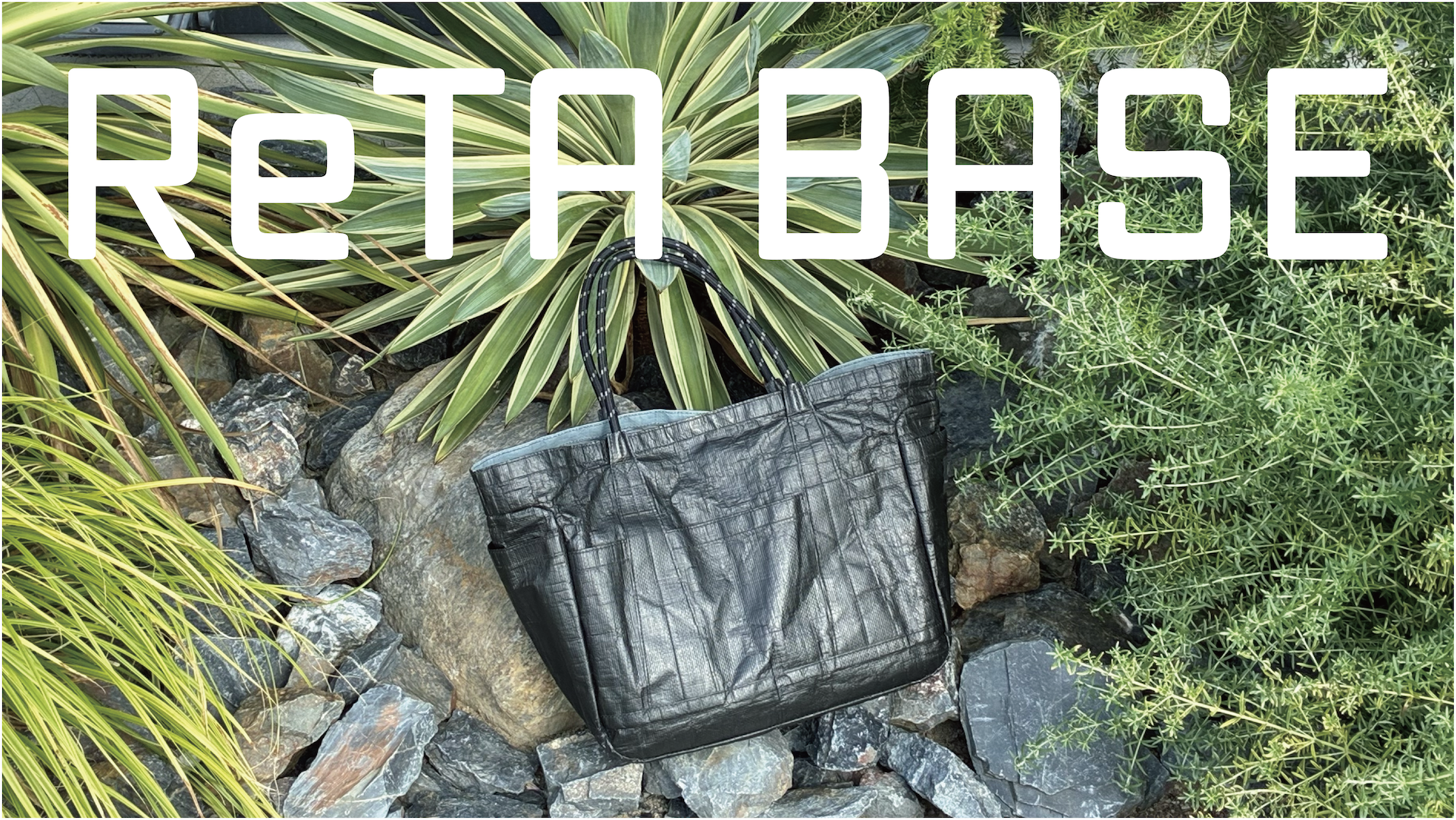
In 2022, we launched "ReTA BASE," a plastic resource recycling upcycling brand/project, with Pantech , a company that shares our vision. With circular design in mind, we have worked together on everything from developing fabrics using recycled plastic raw materials to manufacturing and selling final products such as tote bags, and developing our brand strategy.
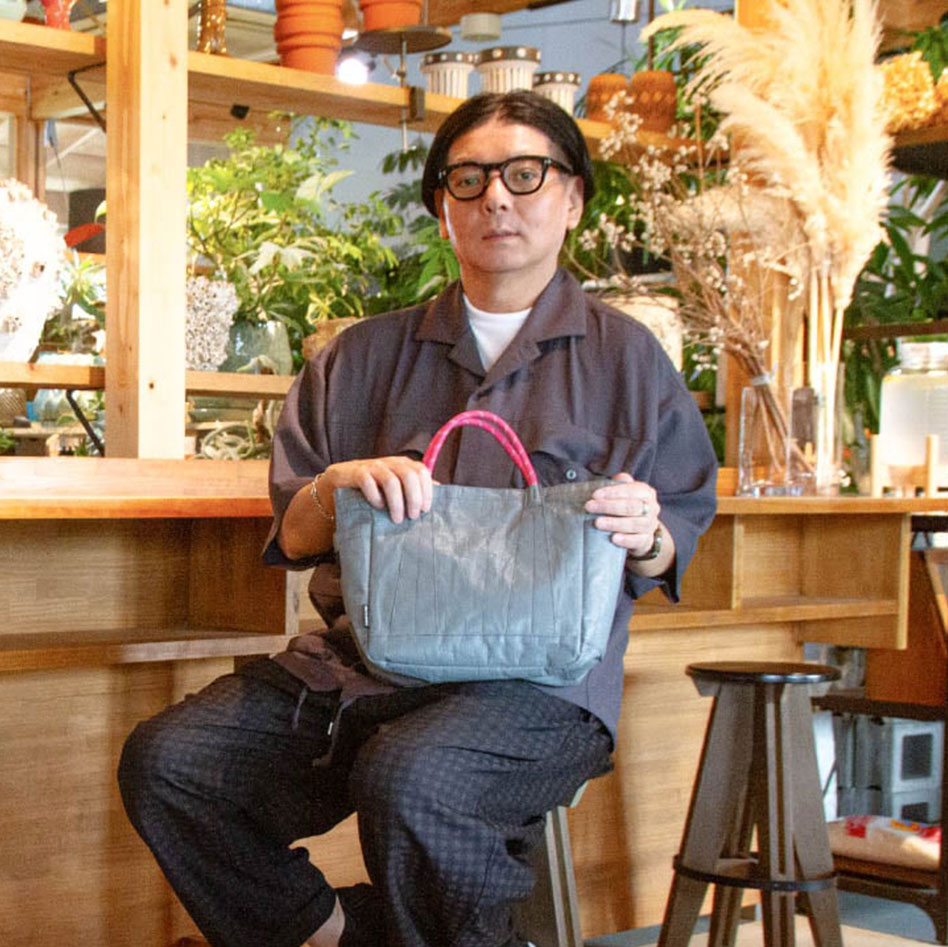
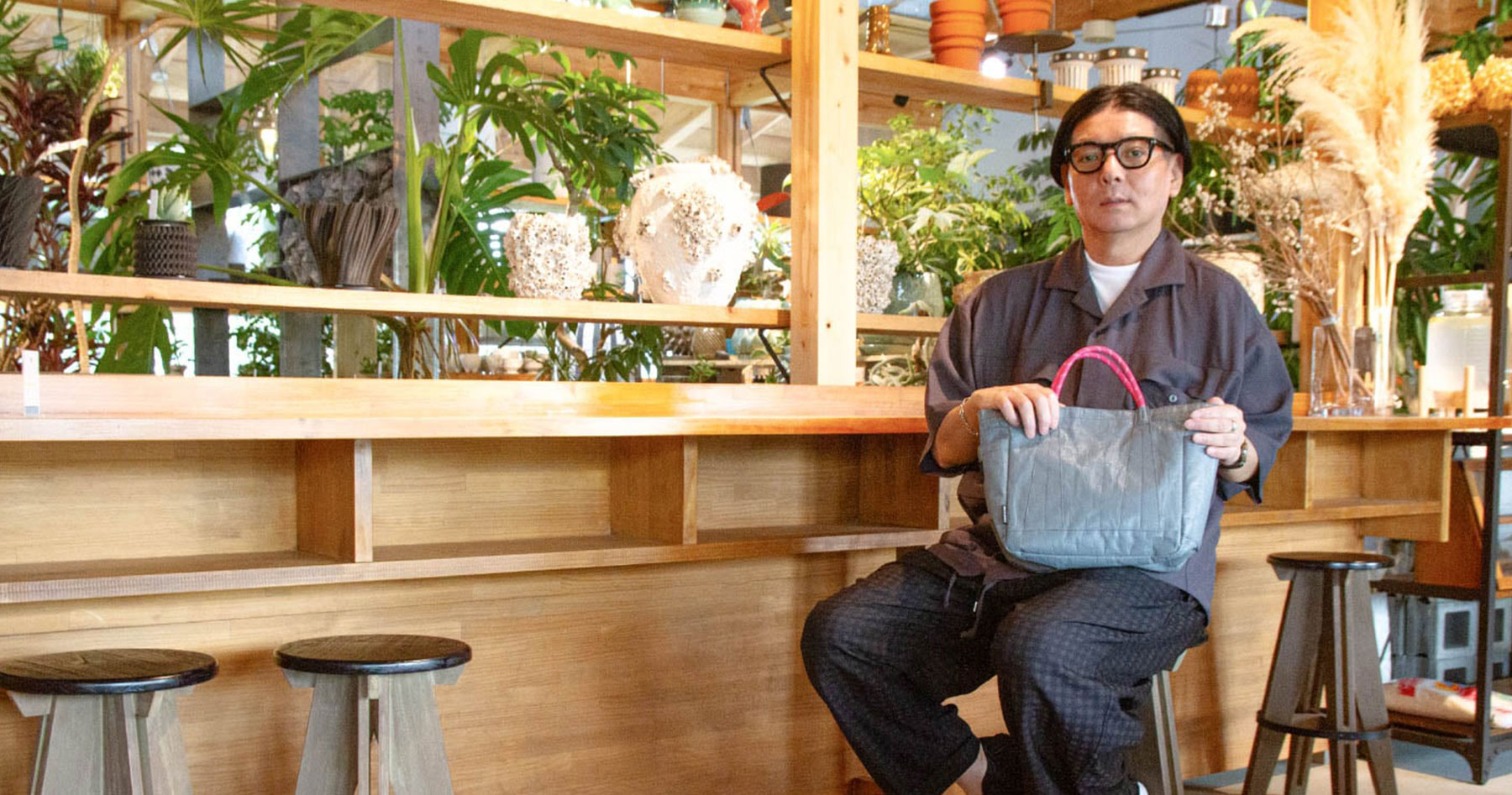
Why did they collaborate with Pantech , a company in a different industry, to create "ReTA BASE"? And how do they plan to develop "ReTA BASE" in the future? We asked Mr. Goto, Director/Conceptor of TRIFE DESIGN, who has been involved in the launch of "ReTA BASE" from the beginning.
* All information in this article is current as of the day of the interview.
Thoughts on "Circular Design"
- -
The "New Life Project" uses "creation" and "environment" as its keywords, but how did your interest in "circular design" come about?
- Mr. Goto
When I start a new project, there are two things I always keep in mind: one is to "understand social trends," and the other is to "achieve differentiation."
In terms of "reading social trends," as all industries shift towards a circular economy, the apparel industry, too, is losing its environmental and industrial sustainability by continuing with the traditional model of "mass production," "mass consumption," and "mass disposal," and repeating short life cycles. Furthermore, companies need to address issues such as marine plastic pollution, clothing waste, and human rights considerations in raw material procurement and manufacturing as part of their corporate responsibility. For these reasons, I believe that "sustainability" is now an indispensable perspective no matter what we do.
Furthermore, while I often hear people say that "differentiation is necessary," I believe that simply differentiating oneself is not enough to clearly establish a distinction from others. Rather, I believe that the concept of "differentiation"—creating something entirely new based on a completely different perspective and values—is what is truly important.
By understanding social trends and being mindful of differentiation, we arrived at "circular design," which involves designing the lifecycle with resource recycling in mind.
Circular design goes beyond mere aesthetics and functionality as a product, placing great emphasis on how to circulate resources. Compared to sourcing fabrics and materials from trading companies and manufacturing products this way, the number of stakeholders increases significantly, and the scope of coordination, negotiation, and direction becomes much broader. For these reasons, redesigning the lifecycle with circular design in mind is not something that can be done overnight. However, at TRIFE DESIGN, we believe it is necessary to gradually incorporate circular design into our manufacturing process, and based on the American philosopher John Dewey's concept of "Learning by doing," we launched "NLP."
Circular design cannot be completed by a single company alone. That's why choosing the right partner is extremely important. I believe that it is difficult to combine each other's knowledge and experience and create new value without a trustworthy partner who shares our values and vision.
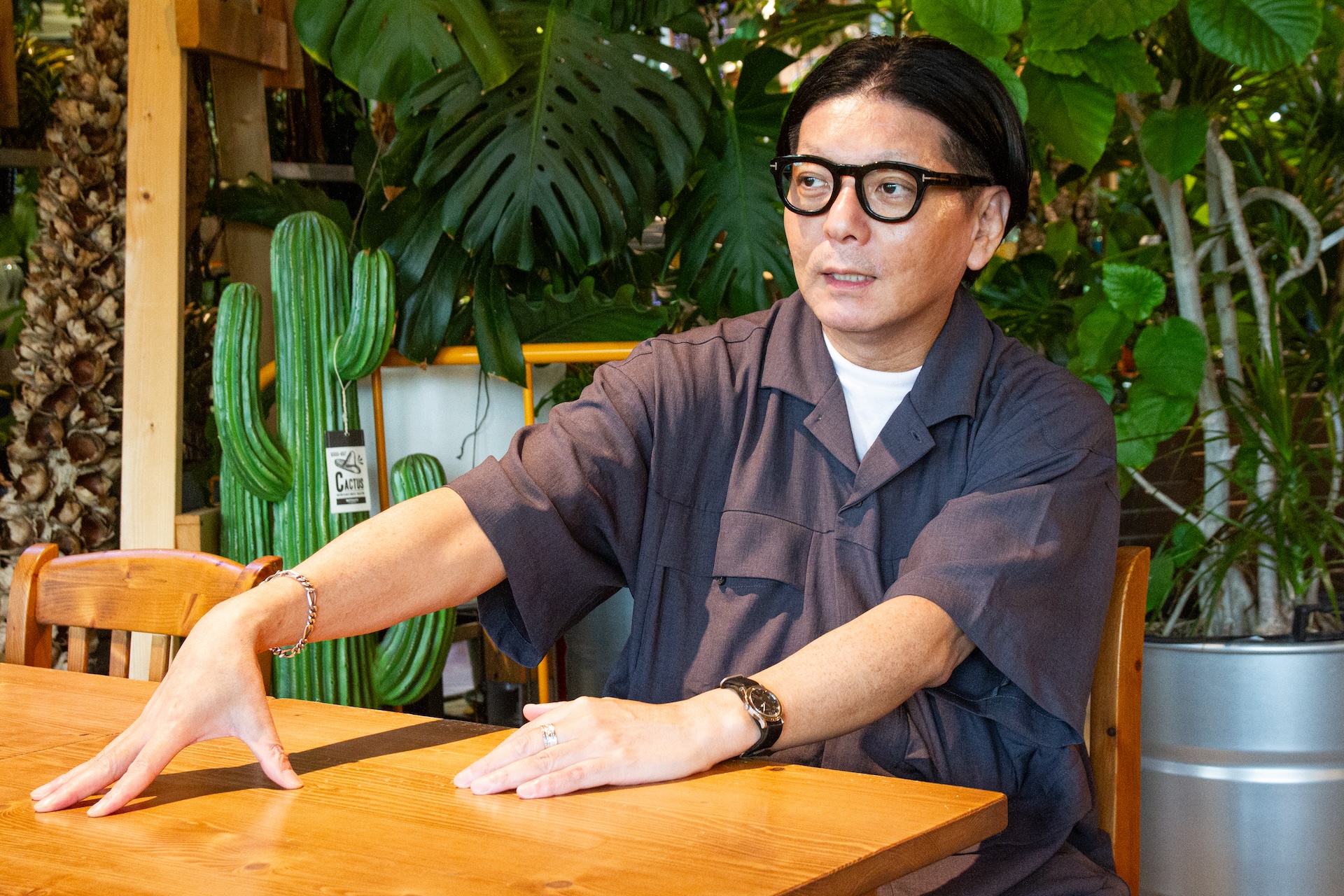
The reason we chose Pantech as our partner and the story behind the birth of the "ReTA BASE" brand.
- -
How did you first encounter Pantech ?
- Mr. Goto
If we are aiming for "differentiation," we need an approach that is different from other brands. However, if we only search for something new within the framework of the apparel industry, I honestly feel that most of the truly innovative ideas have already been exhausted. That's why at TRIFE DESIGN, we strongly emphasize co-creation with other industries. We believe that by joining forces with people from completely different fields, we can generate ideas that are not bound by industry norms, and that these ideas have great potential to lead to commercialization.
Therefore, when looking for a partner, I made a point of going to exhibitions that were far removed from fashion, such as those featuring small and medium-sized enterprises, rather than fashion-related trade shows.
Amidst all of that, Pantech 's booth caught my eye at an exhibition focused on resource recycling.Unlike other companies in the recycling sector, it was immediately clear that Pantech's booth, as well as the displays of recycled material samples and products, and the wall graphics, were all designed with intention. So, to be honest, my initial interest in Pantech wasn't based on the theme of plastic recycling. I was initially impressed by the company's apparent understanding of design, so I stopped by to learn more. I then discovered that they are actually a company strong in plastic recycling, which piqued my interest even more.
- -
What was the process that led to you and Pantech launching "ReTA BASE" after meeting at a trade show?
- Mr. Goto
After the exhibition, we continued to exchange information, and one day I had the opportunity to visit their headquarters in Shiga. At that time, the person in charge at Pantech told me about a circular economy project they had worked on. It was an initiative to recycle unused plastic shopping bags in the warehouse of a certain retail company into disaster prevention sheets, coinciding with the introduction of charges for plastic shopping bags. I was also shown samples of the sheets (flat yarn cloth) that were made at that time.
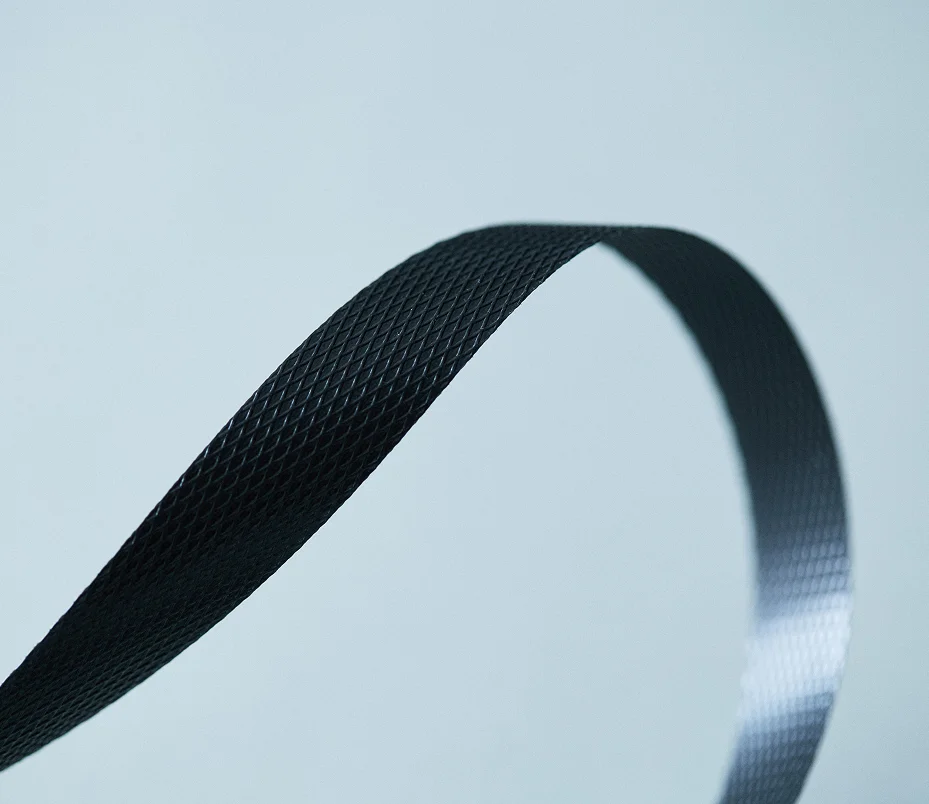
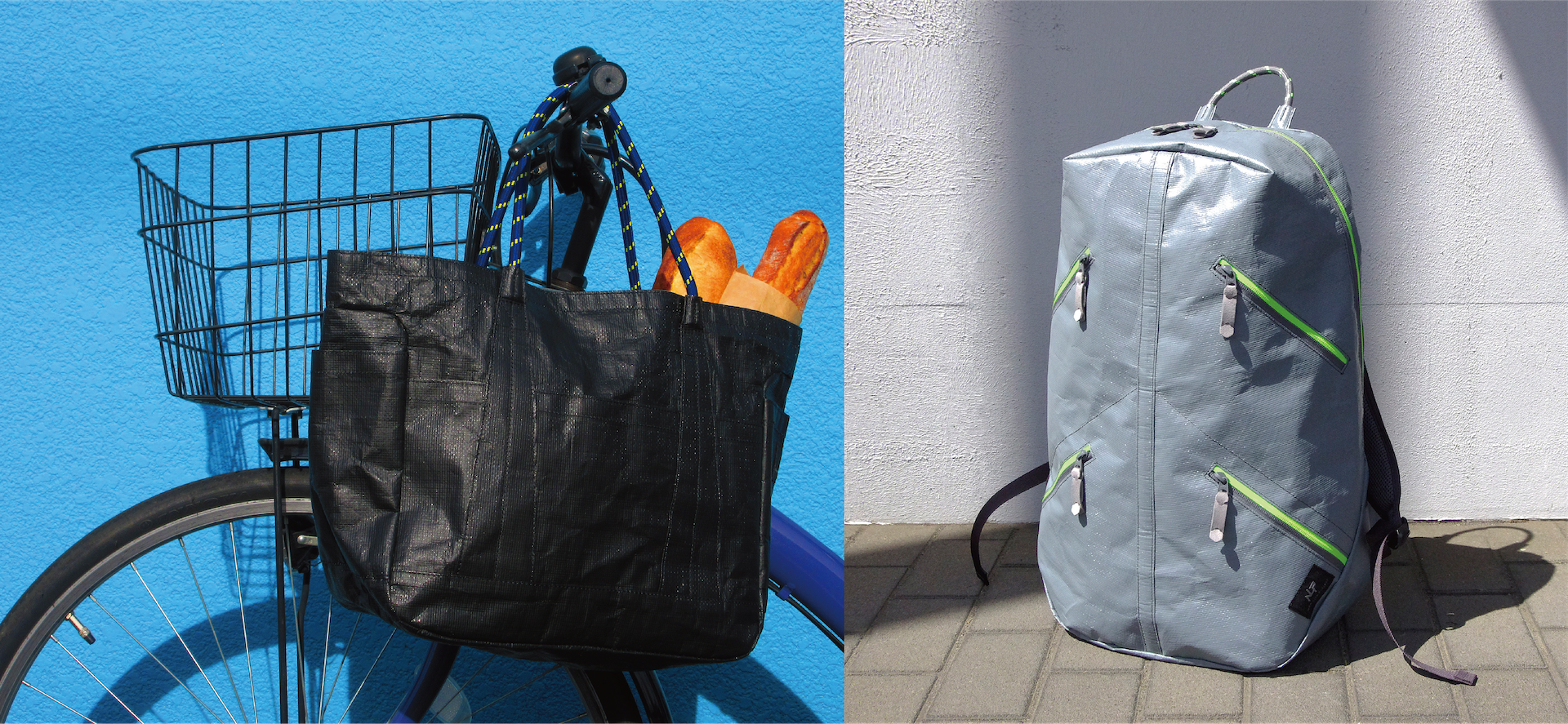
Flat yarn cloth is a versatile material, so beyond disaster prevention sheets, variations can be considered for the final product, and it can be expanded into bags and other items that TRIFE DESIGN excels at. The retail company's example is a one-off, temporary initiative, but by changing the target material, it can be made into a continuous effort. From this realization, we discussed the possibility of collaborating with Pantech , which has expertise in plastic resource recycling and can handle everything from collecting unwanted plastics and recycling them into raw materials to manufacturing products, and TRIFE DESIGN, which has strengths in planning, manufacturing, and selling lifestyle goods including bags, to launch a plastic resource recycling brand. We then refined the plan through lively discussions via phone, chat, and web conferences.
What plastic resources should be collected and recycled? Where can processing and manufacturing take place? Where in the final product can recycled plastic raw materials, which are of lower quality than virgin raw materials, be used without compromising the quality of the final product? Can we create a platform that will allow companies and individuals interested in this initiative to participate? How should trademarks be handled, and where is the best place to sell the final products?
In this way, we worked out every detail, from how to create the product to how to build the system to make it a viable business. I think it took about three months from ideation to organizing the plan and creating a prototype of the sheet, so looking back, I think we were communicating quite closely.
- -
What do you think are the conditions for successful co-creation through partnerships?
- Mr. Goto
I believe the process I described earlier was possible because our partner was Pantech .
The reason we decided to collaborate with Pantech in the first place is that Pantech have a broad overview of the industry and share values that are similar to ours in terms of sensibilities and ideology. No matter how much knowledge or experience someone has, if they only understand their own industry or if their fundamental values are different, they won't be able to reach a common understanding, and collaboration and co-creation will be difficult.
Perhaps it's because Pantech does business with a wide range of industries, but their high level of information awareness and flexible thinking made communication easy, and I believe we were able to smoothly establish a common language and clear understanding.
When I presented challenges, they responded quickly and offered constructive suggestions, drawing on their extensive knowledge. When I offered new opinions or additional requests, they provided even more advanced ideas. I believe that the ability to engage in such two-way and creative dialogue is crucial for building a positive collaborative relationship.
While pursuing "numbers" such as the percentage of recycled materials used and business profits is certainly important, overemphasizing them can become a hindrance to new initiatives. We believe that initiatives that prioritize shared aspirations and philosophies, and the creation of long-term value, are what lead to the sustainability of co-creation, and I think this project progressed smoothly precisely because Pantech and we shared these common ground.
Industry reactions to "ReTA BASE"
- -
What kind of reaction did you get from apparel industry users to "ReTA BASE"?
- Mr. Goto
We've received a lot of positive feedback from buyers at select shops and from users alike. In particular, we've noticed high praise for its functionality, such as its lightweight and waterproof properties. ReTA BASE's material is extremely lightweight and durable, and can be washed with water when dirty, making it suitable not only for city use but also for a wide range of outdoor activities like going to the beach or camping. The wide gusset and numerous pockets contribute to its high usability, which I believe also contributes to this positive reception.
Thanks to your support, the number of companies carrying ReTA BASE has been increasing since its launch in 2022. While we proactively engage in sales promotion, we have recently seen an increase in direct contact via social media such as Instagram.
As I've mentioned before, ReTA BASE is based on the fundamental philosophy of circular design, and while our products use recycled plastic materials, we deliberately refrain from promotions and media relations that emphasize our environmental considerations. Our aim is for our products to be chosen simply because they are "cool" and "easy to use." As environmental considerations become commonplace, I believe that consumption within the context of ethical consumption, specifically because something is "environmentally friendly," is losing its meaning. Therefore, our priority is for people to find the product itself appealing, and only then do we hope they will resonate with the concepts of circular design. We are consciously working on this order when branding ReTA BASE.
Future prospects
- -
Please tell us about your future plans for "ReTA BASE".
- Mr. Goto
Since its launch, ReTA BASE has expanded its model variations and has seen developments such as special orders from a well-known brand and collaborative projects with companies. Looking ahead, we want to continue challenging ourselves to establish a market position as a brand while simultaneously increasing the proportion of recycled plastic materials used.
While efforts to achieve sustainable resource recycling are being experimented with globally, it is difficult to envision the ideal from the outset. In fact, I believe there are very few examples worldwide that have achieved complete resource recycling or horizontal recycling. Therefore, while envisioning the ultimate ideal, I think it is important to clearly demonstrate "how far we have achieved" at this stage and communicate it step by step.
Currently, ReTA BASE materials contain 15% recycled plastic raw materials derived from used stretch film, but we hope to increase the recycling ratio even further in areas such as flat yarn and coating processes. This will require overcoming technical challenges and co-creation with many stakeholders, including vein recycling, but we want to steadily take one step at a time.
In collaborative projects like ReTA BASE, it's crucial that no single company monopolizes brands, trademarks, or profits. If one company monopolizes these, other participating companies will find it difficult to perceive the benefits, making it challenging to maintain and develop a sustainable collaborative relationship. Therefore, in ReTA BASE, we place ReTA BASE at the center, leaving room for other companies, including ours and Pantech , that share our vision or possess the technology and ideas to further develop ReTA BASE to participate.
By combining the strengths of each participating company, and with each taking responsibility for managing their own brand and trademark, we aim to promote the project within such an open system and strive for the growth and expansion of the ReTA BASE brand.
- -
Finally, what are your expectations for Pantech ?
- Mr. Goto
Pantech is truly one of Japan's leading companies when it comes to plastic recycling. I believe they are one of the few companies that possesses expertise not only in the collection and recycling of plastic resources but also in the product development phase using recycled plastic raw materials.
On the other hand, because we are in different industries, we have knowledge, resources, and networks that Pantech does not. That's why we were able to complement each other and create a case study like ReTA BASE, and we want to continue to present new value to society that doesn't fit into existing frameworks.
For example, it might be interesting to try launching Pantech 's private brand. If you handle not only the supply of raw materials but also the manufacturing of the final product, you will have more flexibility in pricing and it will also contribute to the formation of the company brand. If you are only pursuing short-term sales and profits, such a challenge may be difficult, but I believe that Pantech is managed with a long-term perspective, considering what value their efforts will bring to society, stakeholders, and the company brand, so investing in such a challenge would be worthwhile.
Going forward, we hope to collaborate with Pantech to create initiatives that contribute to the realization of a sustainable society, transcending industry boundaries, from material development to product manufacturing and brand development.