Case Summary
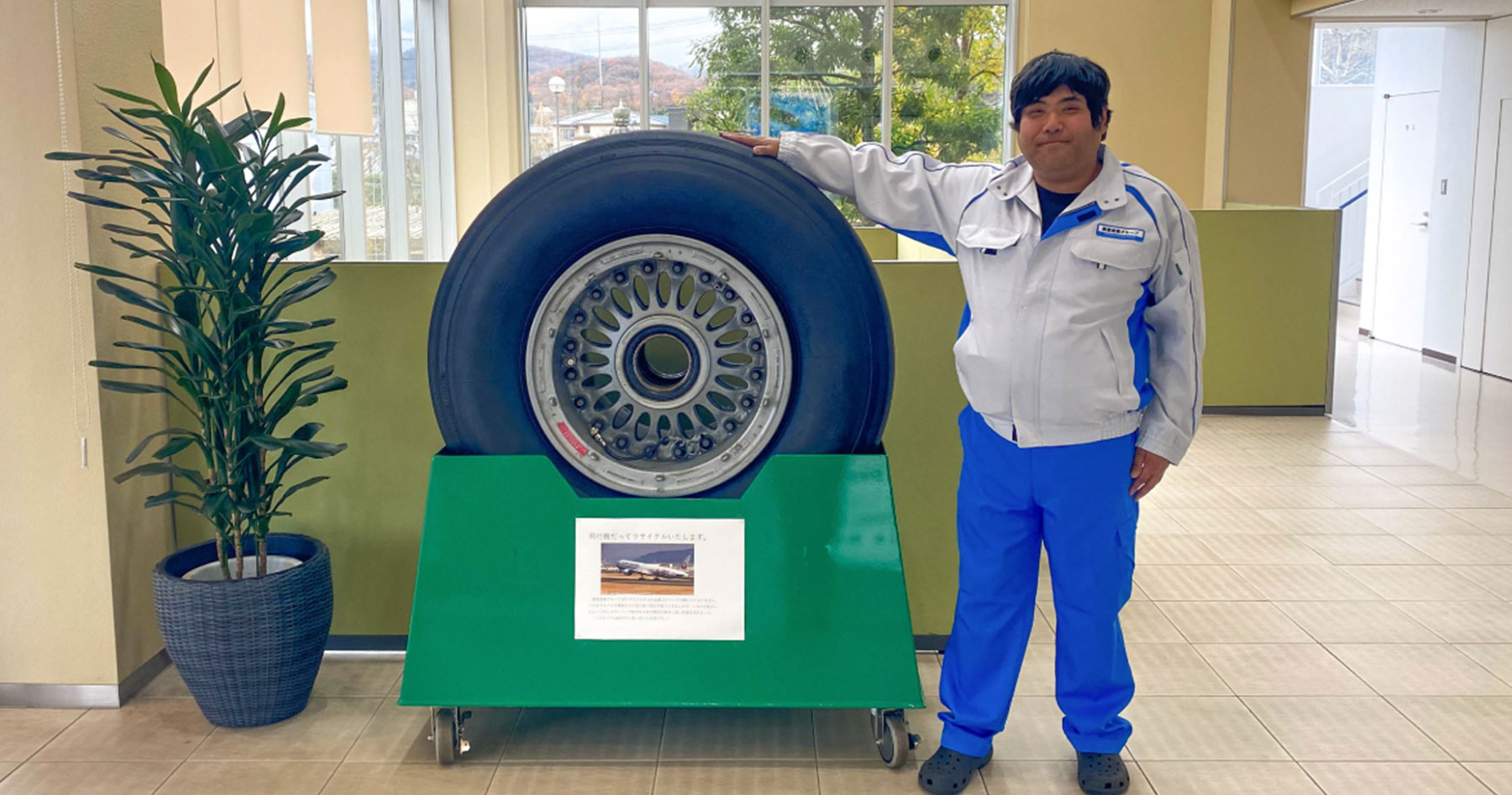
Nippon Sogo Recycle Co., Ltd. is based in Fushiki, Takaoka City, Toyama Prefecture, a place steeped in history. The company treats a wide range of metal scrap, from large metal products such as railway cars, buses, and ships to small home appliances, as resources, achieving a high recycling rate of over 90%. On the other hand, while material recycling of mixed plastic resources generated during the metal sorting process is possible, the subsequent commercial flow and scheme through which these resources are circulated have not been fully understood or made visible.
"We want to circulate plastic resources domestically, just like metals"—that was our desire, but we lacked sufficient traceability, specialized knowledge, and expertise in the plastics sector.
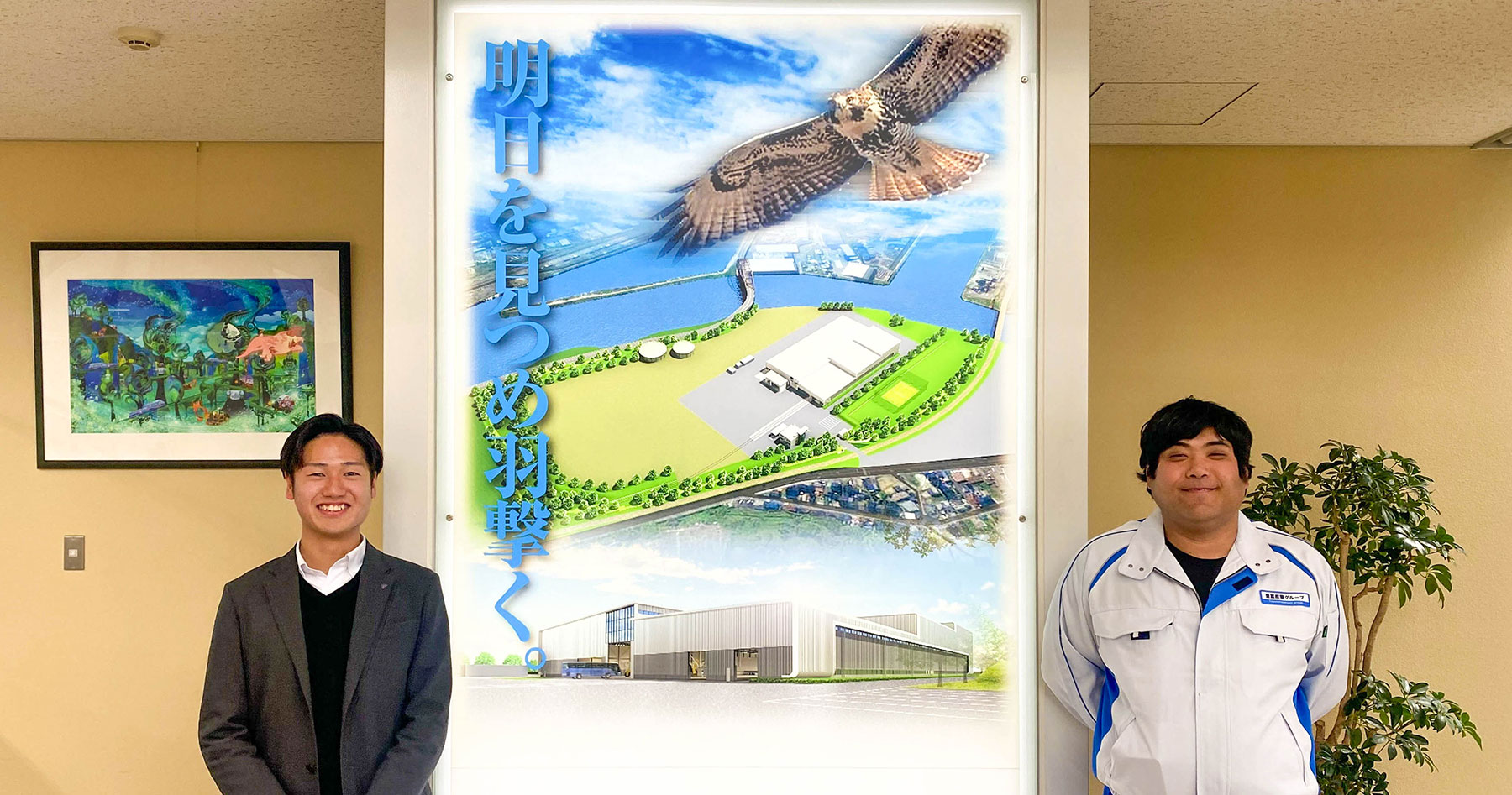
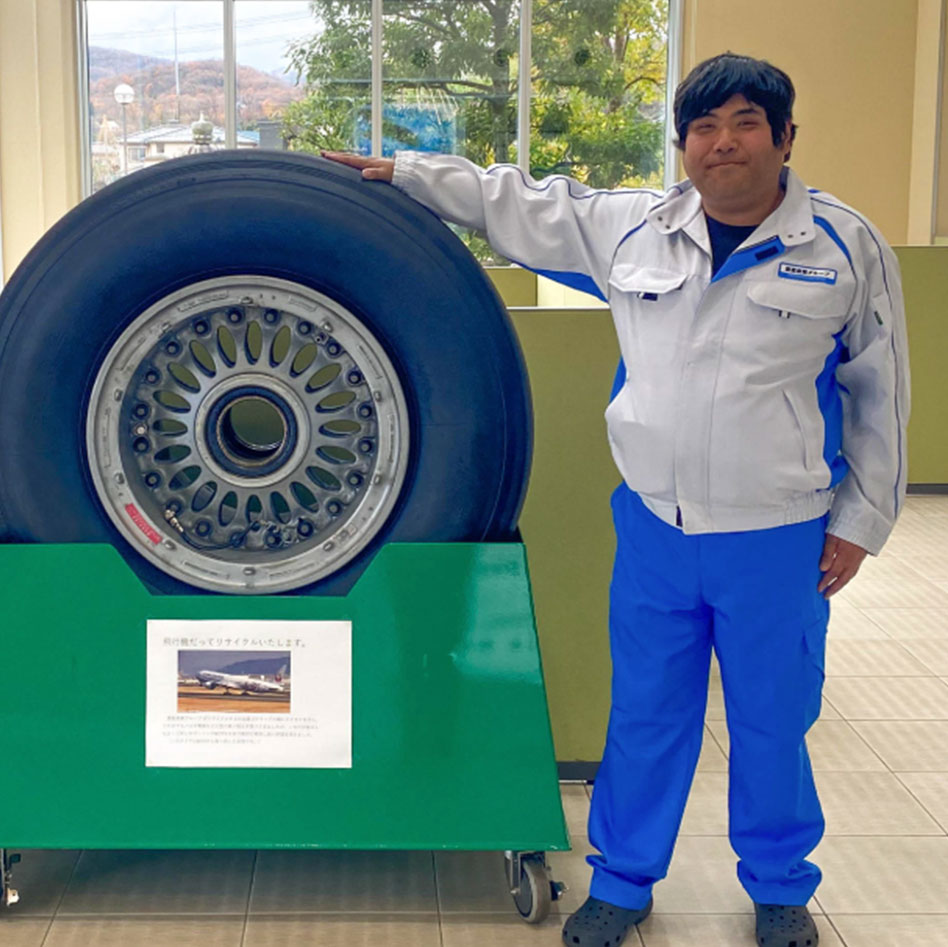
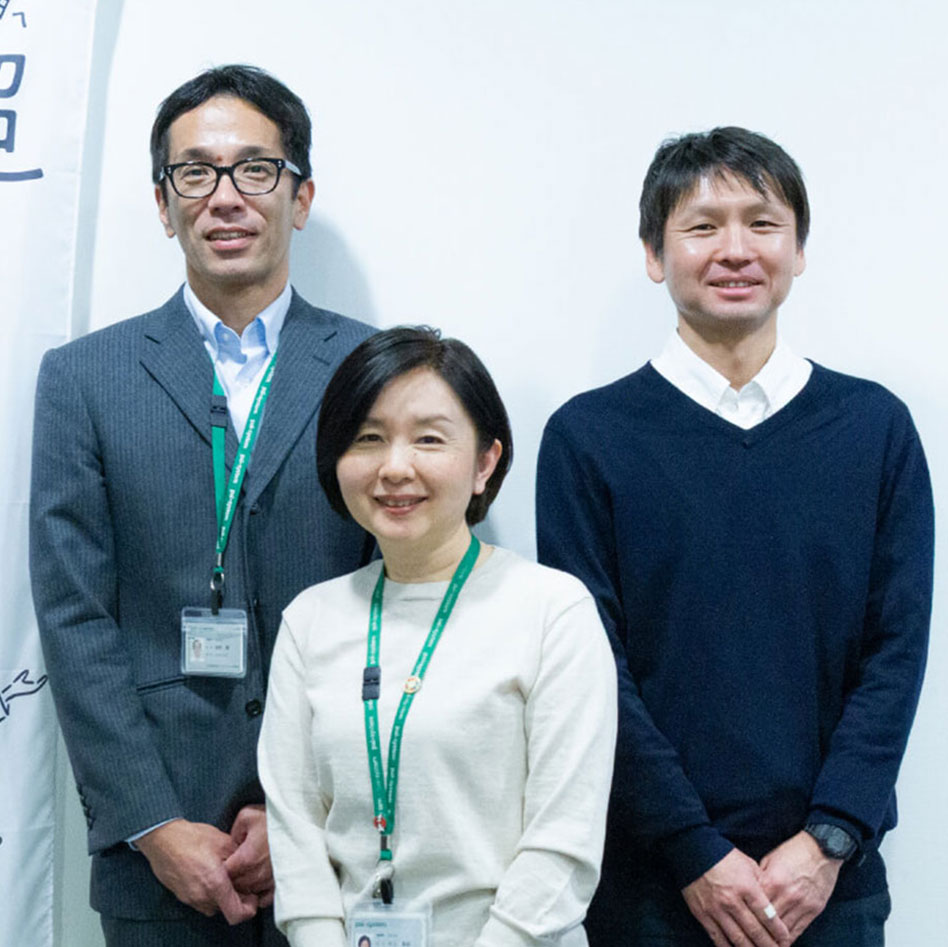
How did things change after encountering Pantech ? This time, we spoke with factory manager Yokoyama to find out.
* All information in this article is current as of the day of the interview.
- While domestic recycling was already in place for metal resources, material recycling had been achieved for mixed plastic resources, but the subsequent commercial flows and schemes remained unclear, and the final destination of the resources was unknown.
- The Noto Peninsula earthquake in January 2024 led to a surge in the acceptance of small electrical appliances, resulting in an oversupply of mixed plastic resources.
- Because their expertise was in metal recycling, they lacked sufficient knowledge of plastic recycling.
- A clear domestic recycling scheme has been established, where resources are sorted, processed, and utilized within the country, alleviating concerns about their destination.
- Prompt vehicle dispatch and operational support based on an understanding of the on-site situation have increased operational stability.
- Compared to other companies, they possess a deeper knowledge of plastics, and we were able to gain a "business partner" who goes beyond being "simply a buyer" and can even exchange knowledge about resource recycling.
Challenges before starting a business relationship with Pantech
- -
Nippon Sogo Recycle Co., Ltd. primarily engages in metal recycling, but what challenges did you face regarding the recycling of plastic waste, which is a by-product of that process?
- Mr. Yokoyama
At our company, we shred used small electrical appliances using a large shredder, but because the shredded particles are extremely fine, tiny metal particles and other foreign objects get mixed into the plastic during the process of separating metal from plastic.
We have established a sophisticated sorting system for metals, and most of the recovered resources are returned to manufacturing sites within Japan. On the other hand, while we are able to recycle the mixed plastic resources that remain after metal recovery by selling them for value, the actual distribution and utilization of these materials afterward is unclear, and we are unable to grasp whether they are truly circulating as resources or where they are ultimately being used.
Furthermore, our equipment makes it difficult to further refine the sorting of the mixed plastic resources after crushing. While we have a certain level of knowledge and experience in the metal field, our expertise in the plastic field is not sufficient. In this situation, we were exploring how to ensure traceability.
Our encounter with Pantech and why we chose them as our recycling partner
- -
How did you first encounter Pantech ?
- Mr. Yokoyama
It all started with a phone call I received from a sales representative at Pantech .
Around that time, the Noto Peninsula earthquake caused a surge in the volume of small electrical appliances to be processed, resulting in an oversupply of mixed plastic resources. This created a need to consider more stable and responsible methods than ever before.In this context, Pantech proposed a scheme based on domestic recycling: "to purchase plastic resources at a price, sort and process them domestically, and supply them to domestic manufacturers as recycled plastic raw materials." Furthermore, the fact that they could purchase several hundred tons of mixed plastic resources at once directly addressed the challenges we faced at the time, so we became very interested and decided to "hear more about it."
They then promptly traveled to Toyama for us. After carefully listening to our challenges and receiving a direct explanation of their specific proposals, we were deeply impressed by their sincerity and sense of responsibility towards their work. As a result, we became convinced that they were a partner with whom we could build a long-term partnership, not just one focused on short-term problem-solving.
Since we actually started doing business with them, we have felt a great sense of security because of the extremely fast speed of vehicle dispatch arrangements and their ability to respond flexibly based on an accurate understanding of the situation on site. Even in the hectic situation of disaster response, we feel that we were able to minimize the burden on the site staff.
- -
What were the deciding factors in choosing Pantech as your partner?
- Mr. Yokoyama
The biggest deciding factor was that the "final destination" for the plastic resources was clearly defined.
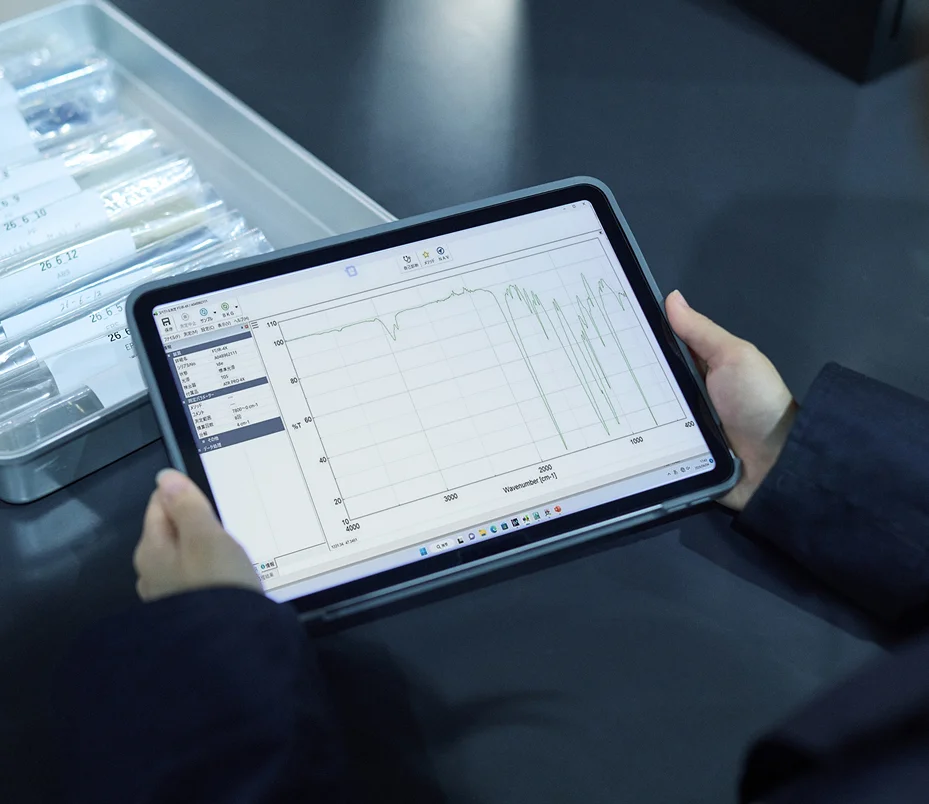
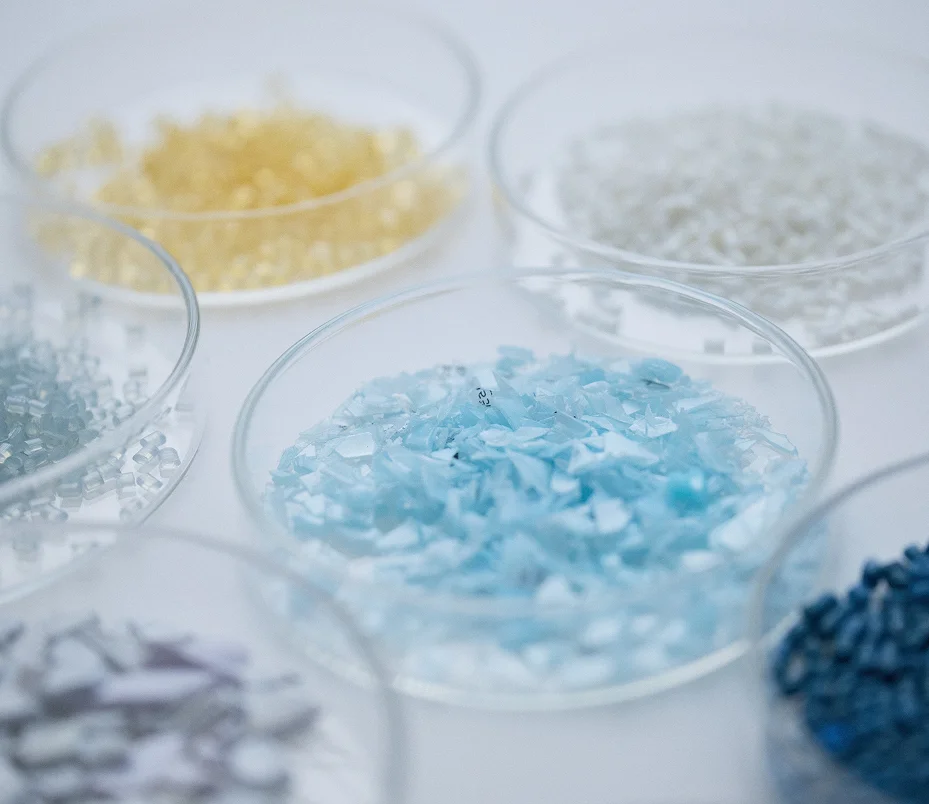
The mixed plastic resources discharged from our company are purchased for value by Pantech and then processed through multiple advanced sorting processes at our partner recyclers. Specifically, these processes include "specific gravity sorting," which separates plastics in water using differences in specific gravity; "electrostatic sorting," which utilizes differences in the electrostatic charge of each plastic; and "color sorting," which identifies colors using optical sensors.
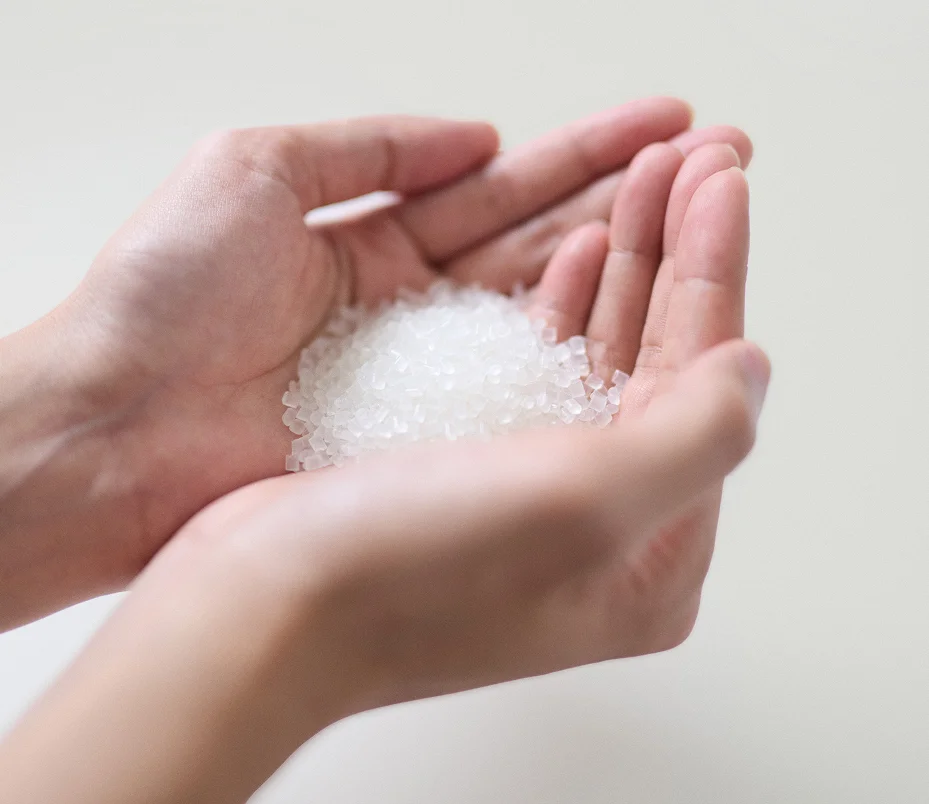
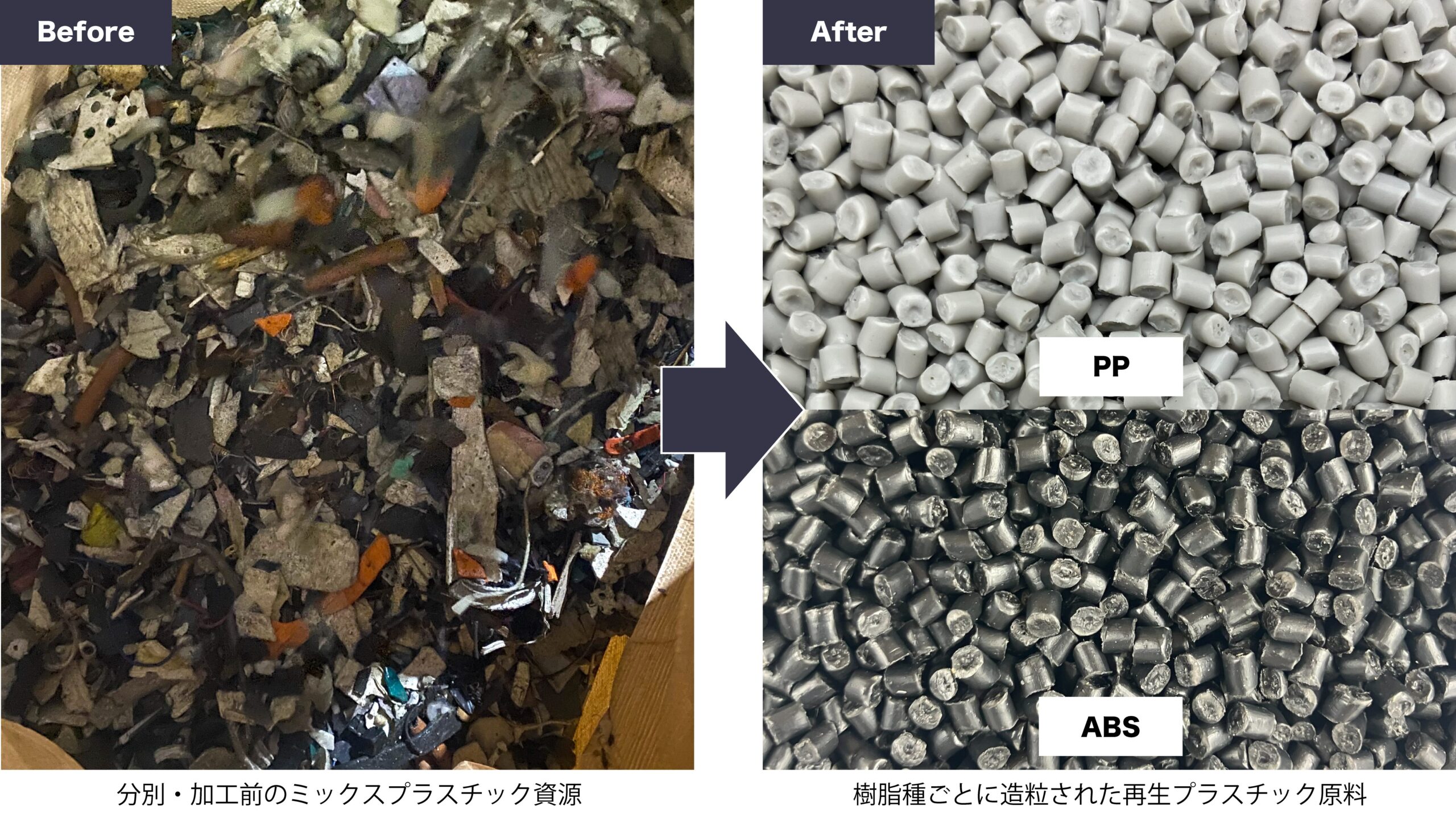
These processes clearly separate resin from foreign materials, including metals, and the recovered resources are processed into recycled plastic raw materials, primarily of single materials such as PP, PS, and ABS. As a result, the quality of the raw materials is greatly improved, and they are ultimately supplied stably to plastic molding manufacturers.
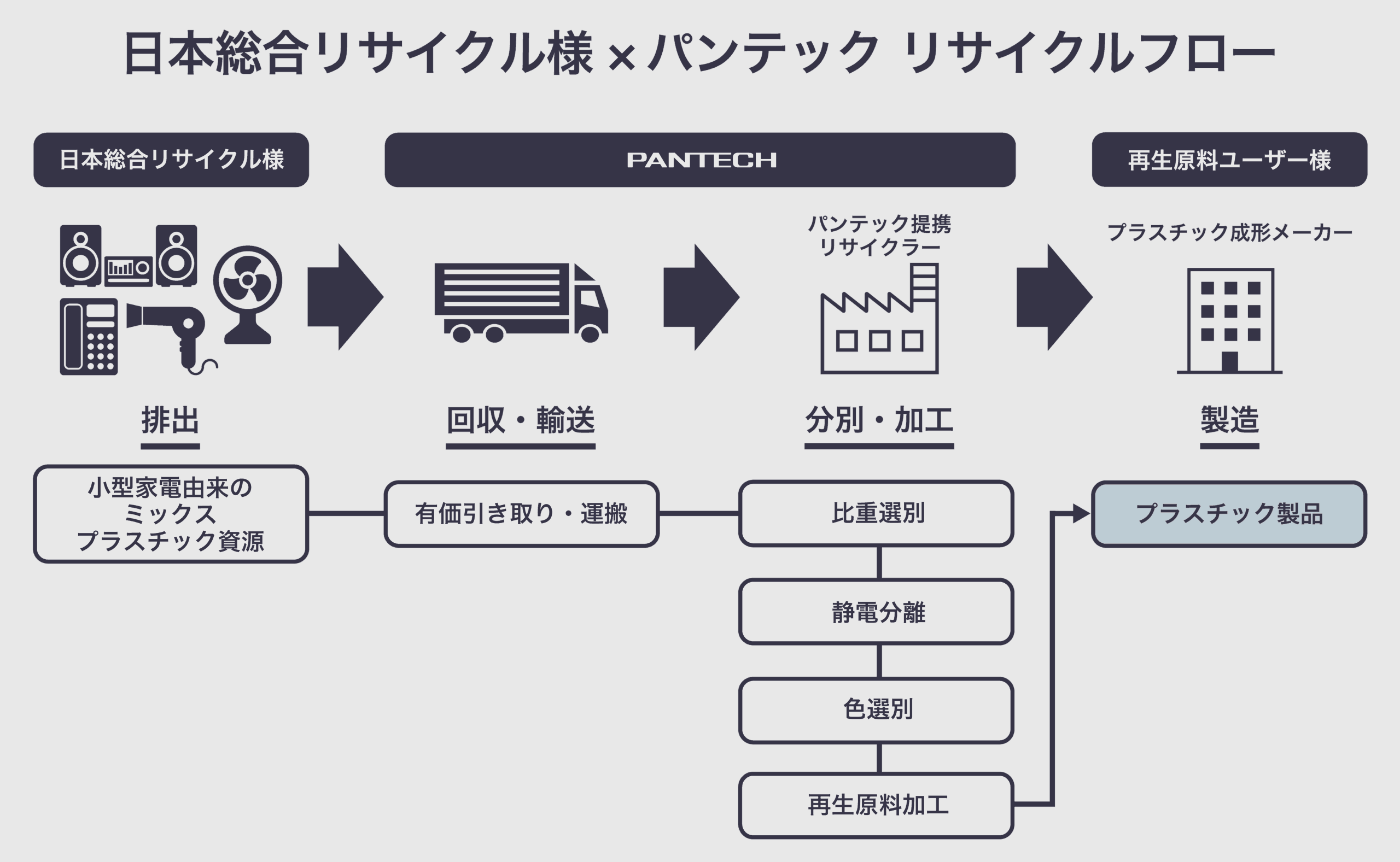
By making this entire process visible, the transparency of traceability has greatly improved.
I believe that being able to track where and how materials are processed, and ultimately used and utilized, rather than simply selling them or taking them back, is extremely important for promoting responsible resource recycling.
Regarding future prospects
- -
What aspects of Pantech do you find unique?
- Mr. Yokoyama
I believe Pantech 's strength lies in its consistent handling of optimal resource recycling schemes, from design to operation, tailored to each material. Having a clear picture of where plastic resources are sorted, how they are processed, and ultimately utilized in various fields is extremely helpful for us as a waste-generating company.
It's rare to receive proposals that combine such transparency and effectiveness, and we consider them a highly reliable partner that we can entrust with confidence.
- -
What is the feedback from those on the ground?
- Mr. Yokoyama
Many users on the ground have praised the speed and flexibility of the vehicle dispatching service. The quick response to requests provides a great sense of security, especially in situations where inventory levels are low.
Furthermore, their extensive knowledge of plastic recycling and their ability to provide proposals that take into account on-site constraints and realities are highly valued. The trust that "they will think things through with you if you consult with them" supports our daily operations.
Future prospects and expectations for Pantech
- -
Please tell us about your future outlook and what you expect from Pantech .
- Mr. Yokoyama
Through our collaboration with Pantech , we have established a scheme in which mixed plastic resources derived from small home appliances are separated into single materials, recycled, and utilized in domestic manufacturing. We believe that the first step is to ensure the stable and continuous operation of this system.
Furthermore, we expect Pantech to leverage their expertise in sorting and recycling, as well as their extensive domestic and international sales channels and network, to further enhance the value of these resources.Rather than trying to complete everything within a single company, we believe that co-creation through a division of roles and collaboration that leverages each company's strengths is the key to a realistic and sustainable resource cycle. We also believe that this approach to resource circulation will support Japanese manufacturing going forward.
Having dedicated ourselves to metal recycling, we truly understand the challenges of plastics. For companies like ours that generate plastic resources as a by-product of their core business, collaborating with a specialized partner like Pantech to achieve resource circulation is a realistic and sound option.
Going forward, we hope to go beyond daily operations and share our knowledge through study sessions on resource recycling, exchanges of information on market conditions and prices, domestic and international corporate trends, and regulations. We also hope to use the insights gained in our respective fields of metal and plastics to drive future improvements. We envision a future where this accumulation of efforts fosters a collaborative relationship that goes beyond mere trading, ultimately raising the overall recycling standards of the industry.