
Case Summary
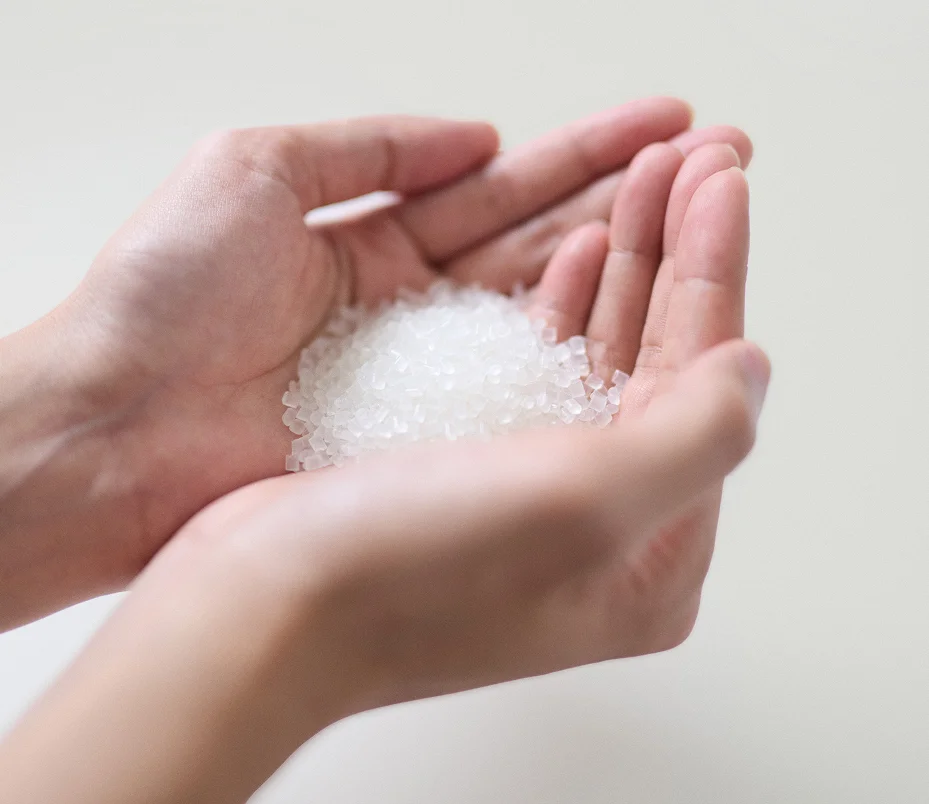
Shin Kogeisha LLC, which aims to "redefine crafts in a modern way" with 3D printing technology as its core, has collaborated with Pantech , a supplier of recycled plastic raw materials, and Inoue Kikaku Co., Ltd., which possesses large-scale pellet-type 3D printers, to develop a chair made entirely from recycled plastic raw materials.
Through the development of materials suitable for 3D printing using physical property data and compounds, and breakthroughs in design and molding techniques, a molding recipe was established. In February 2026, it was unveiled as "WA Stool" at the "Shin Kogei-ten (Department Store)" exhibition and sales event at Isetan Shinjuku.
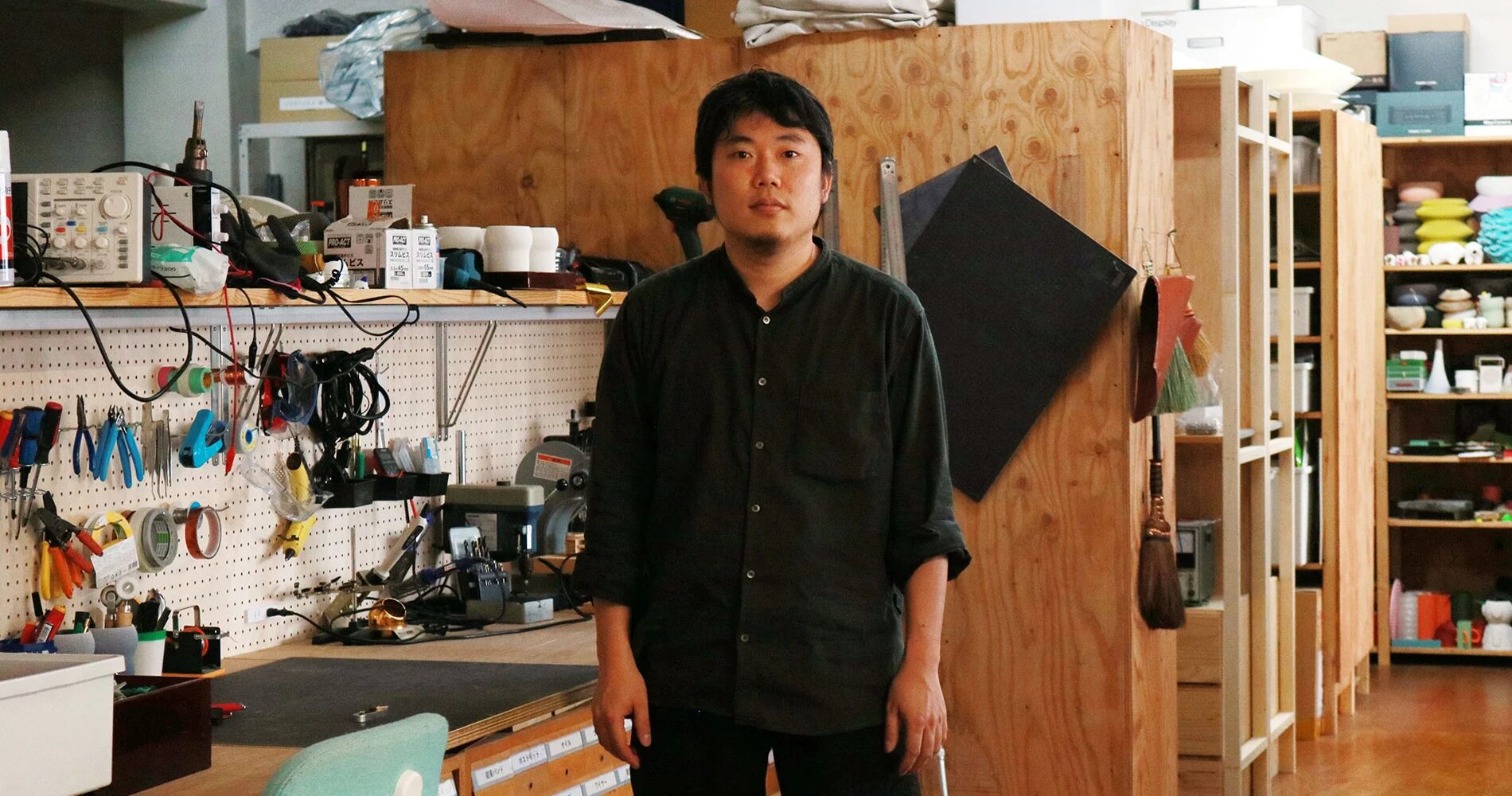
What challenges did they face in developing a large, highly designed 3D-printed chair made entirely from recycled plastic, a rare example in Japan, and how were they overcome? We spoke with Mr. Mitachi, the representative of Shinkogeisha, about their pioneering example of circular manufacturing using recycled plastic materials.
* All information in this article is current as of the day of the interview.
- Although I had always envisioned developing large-scale sculptures, including furniture, "someday," I never had the opportunity to pursue it.
- Although they had been considering using recycled plastic raw materials due to environmental concerns and social trends, they had been unable to implement it due to difficulties in developing procurement routes and concerns about quality and stable supply.
- We lacked connections with development partners who possessed expertise in 3D printing for furniture design, and therefore, we didn't have the environment to embark on product development.
- Through Pantech, we met Inoue Planning, and a development environment for large-scale molded objects utilizing recycled plastic raw materials and a large pellet-type 3D printer was realized.
- Through collaboration between the three companies, they developed and announced "WA stool," a chair made from 100% recycled plastic materials.
- Having found a co-creation partner, the development of "circular manufacturing" starting from recycled materials will be promoted, going beyond just chairs.
An unprecedented challenge born from a chance encounter
- ―
Could you tell us what prompted this initiative?
- Mitaji
Our initial encounter with Pantech was when they contacted us about the possibility of creating novelty items using recycled plastic materials and a 3D printer. Since it was our first time working with recycled plastic materials, they brought us various materials, and we tried printing with them.
During the prototyping process, when I mentioned that I wanted to create something like a chair using a large 3D printer, someone said, "I know a company that can introduce you to someone," and that's how I ended up connecting with Inoue Kikaku, our current 3D printing partner.
Thanks to Pantech 's arrangements, the three companies met and had a brainstorming session. We discussed various aspects, and it came down to the idea of "developing a chair" by leveraging the strengths of all three companies: Pantech , which has a strong supply capacity for recycled plastic raw materials; Inoue Kikaku, which owns large 3D printers and has expertise in commercializing furniture; and our company, which is exploring the possibilities of 3D printing. And so the project got underway.
- ―
Have you always been keenly aware of the challenge of creating large-scale sculptures?
- Mitaji
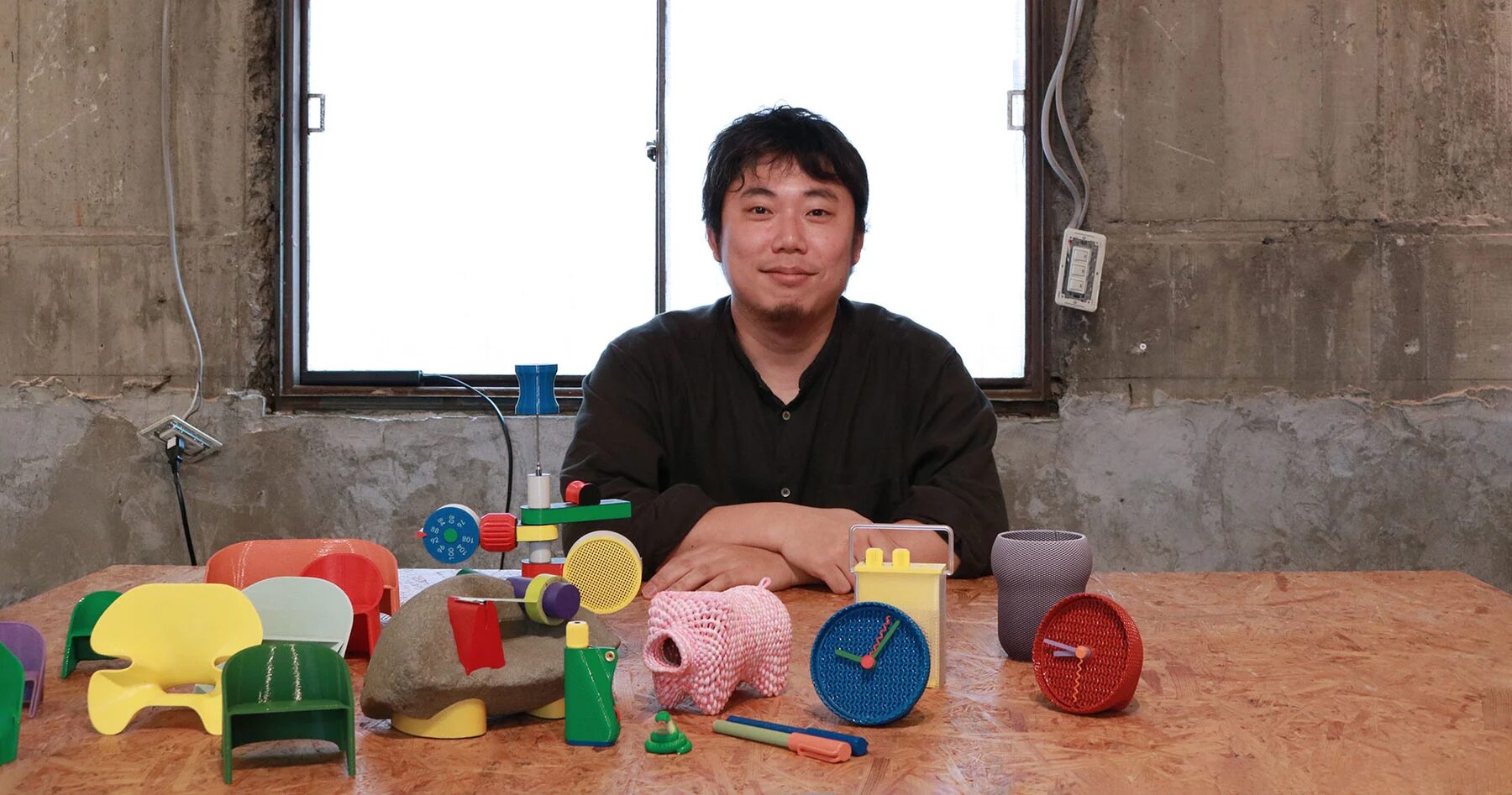
As you can see from our product lineup, until now we've been exploring what we can do with the equipment we already have, rather than focusing on creating large-scale products.
Large pellet-type 3D printers are quite expensive to introduce, and the larger the printed object, the more the material costs increase proportionally. Therefore, while I've always wanted to try large-scale 3D printing, it was an area I hadn't been able to venture into until now. Large printers offer a scale and product possibilities that smaller printers can't reach, so I feel fortunate to have finally found my chance through this encounter.
The design philosophy and technological breakthroughs of "WA Stool"
- ―
Please tell us about the key features you focused on when designing the "WA Stool."
- Mitaji
As this is the first chair produced by Shinkogeisha, we strongly wanted to make it an iconic design and project, and I personally put a lot of effort into it. Unlike the products we've worked on before, its large size means that the amount of resin and the cost of prototyping are orders of magnitude greater, so we couldn't simply go through the trial and error process. That's why we put a lot of thought into the trial and error involved in the development process.
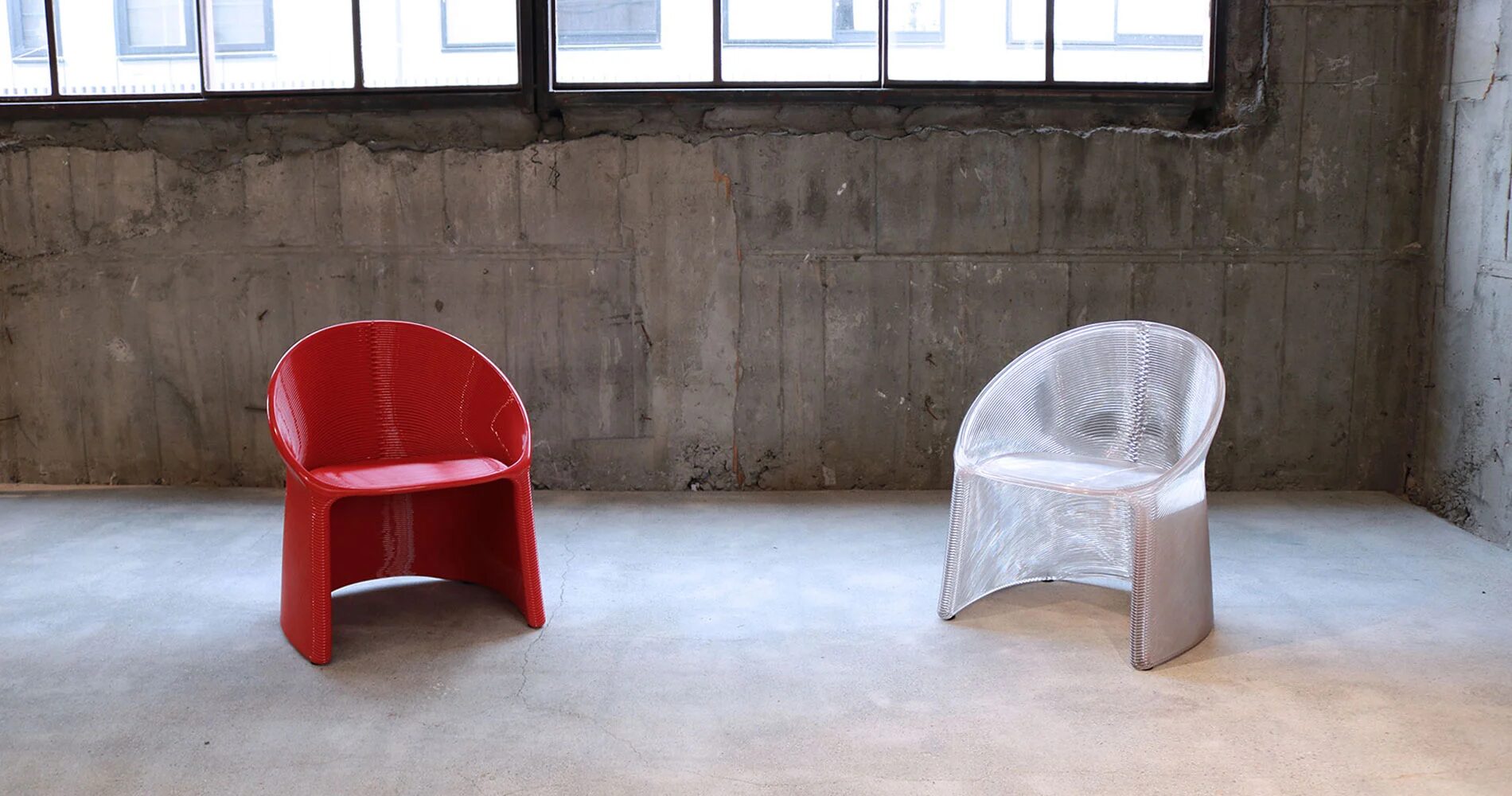
There are already pioneering examples of 3D printing chairs, mainly in Europe. However, instead of simply imitating them, we started our research with the focus on how we, as latecomers, could create something unique while keeping those examples in mind. The mainstream method for 3D printing chairs is to print them horizontally and then turn them upright, but we wanted to do something different. That's how we came up with the method we adopted this time, which involves creating the backrest and seat in one go, with the backrest and seat overhanging at an angle. I think this is probably a manufacturing method that has hardly been done before.
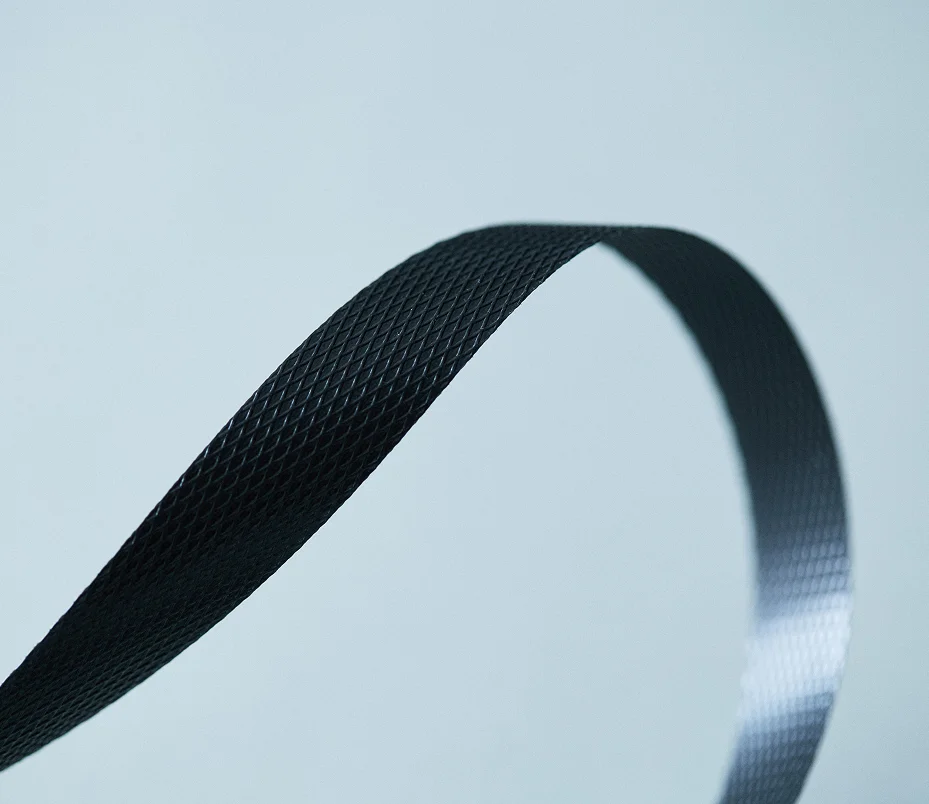
Another major achievement of this project was the creation of a technique called "imaginary double layer pitch" during development. In normal lamination, resin is layered in the same place, but this time, by layering the resin alternately front and back, it appears as if there are twice as many layers. It was an idea that naturally arose when we focused on the beauty of the lamination and pursued it to the fullest extent, but I think it is a technique that could only have been discovered because we developed it using a large pellet-type 3D printer.
We ultimately named the product "WA Stool" because, topologically speaking, the chair's design is such that all its layers are "rings (cylinders)," and we adopted this name based on its shape.
Another distinctive feature of this process is the hand-finishing done after printing. With 3D printers, resin is printed onto a surface called the bed, which holds the printed object in place, but the contact surface inevitably gets distorted. Therefore, we are particular about sanding, rounding, and polishing the edges.
Just as there are no wooden chairs that don't undergo a finishing process, I thought that resin chairs also needed to go through a similar process to become a viable product, and that was one of the challenges we took on.
- ―
Is "craftsmanship" consciously considered as a design philosophy?
- Mitaji
Our company name is "Shin Kogeisha" (New Crafts), and we are very conscious of the concept of "craftsmanship." We've explained why we chose "Shin Kogeisha" in our magazine, "Shin Kogeisha Vol. 1," so if you're interested, please read that. Basically, we believe that craftsmanship is a philosophy and an operating system, and therefore a way of thinking that can be applied to all kinds of design.
Regarding this "WA Stool," one of the inspirations came from the chairs made by Kanjiro Kawai of the "Mingei Movement." At the Kanjiro Kawai Memorial Museum in Gojo, Kyoto, there is a chair carved from a log, and because it is carved from a log, it is extremely heavy. Not just this chair, but furniture from the Mingei Movement era often uses materials lavishly, resulting in thick and heavy pieces, but this is because they were intended to be long-lasting products that could be used for a long time.
In contrast, it seems that the focus of resin chairs has been on increasing production efficiency to make them cheap, lightweight, and mass-produced. As a result, many of these products have a short lifecycle, not designed from the outset to last for decades, due to factors such as degradation from ultraviolet rays.
Of course, I'm not denying that, but this time I wanted to challenge myself to create a resin chair that doesn't adhere to those values. I thought it would be nice to have a resin chair that could last for 100 years, like the chairs carved from logs by Kanjiro Kawai. I feel that being able to create a chair that is like a solid block of resin, which cannot be made by injection molding, is something that can only be done with a 3D printer.
"Circular manufacturing" using recycled plastic raw materials
- ―
What was the reason for insisting on using recycled plastic raw materials?
- Mitaji
When I think about what would happen if we used this much resin from virgin materials, the environmental impact comes to mind, and I feel a psychological resistance to it. I think this is true not only for manufacturers like us, but also for users who use the products. While making the product, I often deeply felt that it only works because it's made from 100% recycled materials.
Of course, we are also mindful of global trends. At European exhibitions related to 3D printers, we are seeing almost no examples of virgin materials being used. 3D printing is a technology that has developed dramatically since the 2010s, and since it is not based on mass production, it has a high affinity with the SDGs. For these reasons, it seems that recycling resins as much as possible and building a sustainable society are fundamental priorities. In the context of environmental considerations, there are also biomass materials, but in Europe, recycled materials are overwhelmingly used more than biomass, so choosing recycled plastic materials this time was a natural progression.
That said, this was our first time seriously working with recycled plastic raw materials. While we had decided to use recycled materials out of consideration for the environment and in line with social trends, to be honest, we had concerns about their difficulty of handling, strength, and stable supply.
- ―
When you actually developed a product using recycled plastic raw materials, what was the most difficult aspect?
- Mitaji
I was struck by how specially formulated PLA and PETG, materials I commonly use, are for 3D printing. The recycled material we used this time wasn't specifically designed for 3D printing, so it was an unknown material to us. To be honest, it wasn't as easy as we had imagined.
The biggest challenge with the materials we used this time was how to minimize warping. Initially, we used a bed with only double-sided tape, but it was difficult to suppress warping with that method, so we created an original clamping system to hold it in place.
Before creating a prototype, I would approach it with the determination that "this time it will definitely work," but each time, I would encounter an unexpected outcome... I repeated this process, meticulously refining each condition, such as bed temperature, nozzle temperature, and room temperature. Only then did I finally create a reproducible master recipe, allowing me to consistently print.
We also normally use pre-consumer PLA material, which we crush and reuse in-house, but the difficulty of printing was significantly higher compared to that. However, as we continued to use the recycled material, we began to get a feel for how we could print without problems even with slight variations in physical properties by changing the settings.
While there were challenges in creating this 3D model using recycled materials, I believe that the fact that we were ultimately able to create a model using 100% recycled materials was only possible thanks to Pantech 's support. I think this experience will be useful even when using different materials, so I would say that accumulating this knowledge was a valuable gain.
Pantech as a development partner
- ―
What are your impressions of Pantech ?
- Mitaji
When I first received your inquiry, I imagined you were a rather conservative company specializing in plastic resource recycling. However, after viewing your website, I was pleasantly surprised to see the wide range of collaborations with major corporations, the production of bags from recycled materials, and the sophisticated visuals. It was a pleasant contrast to the industry image I had imagined. You give the impression of being a company that keeps up with the times.
- ―
Are there any memorable interactions with Pantech during the development process?
- Mitaji
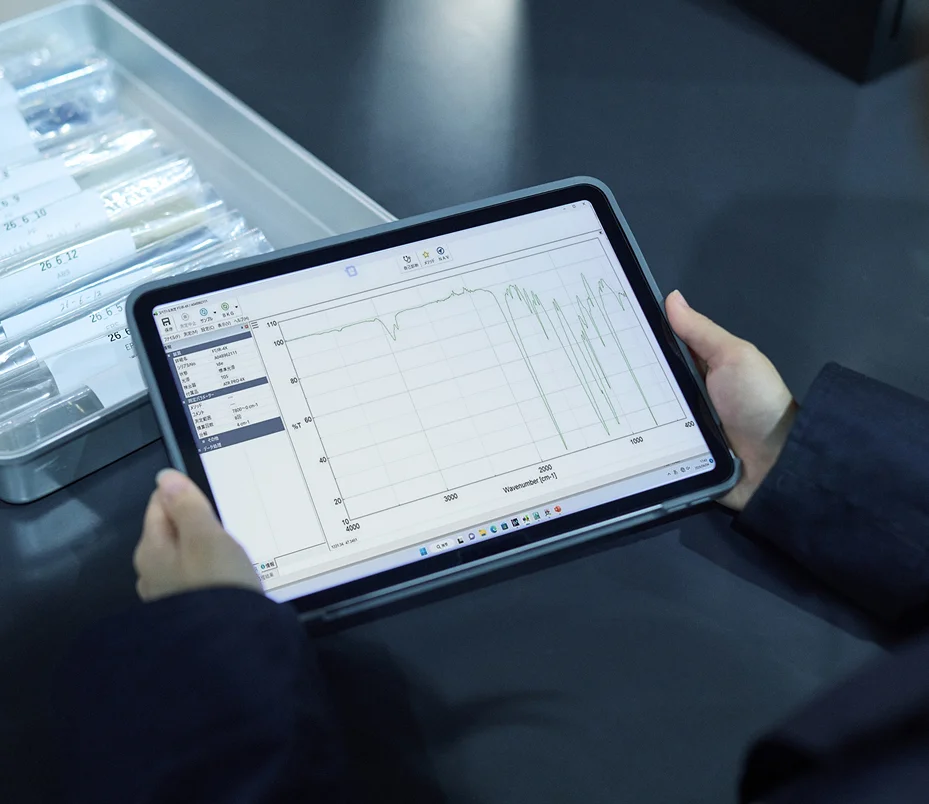
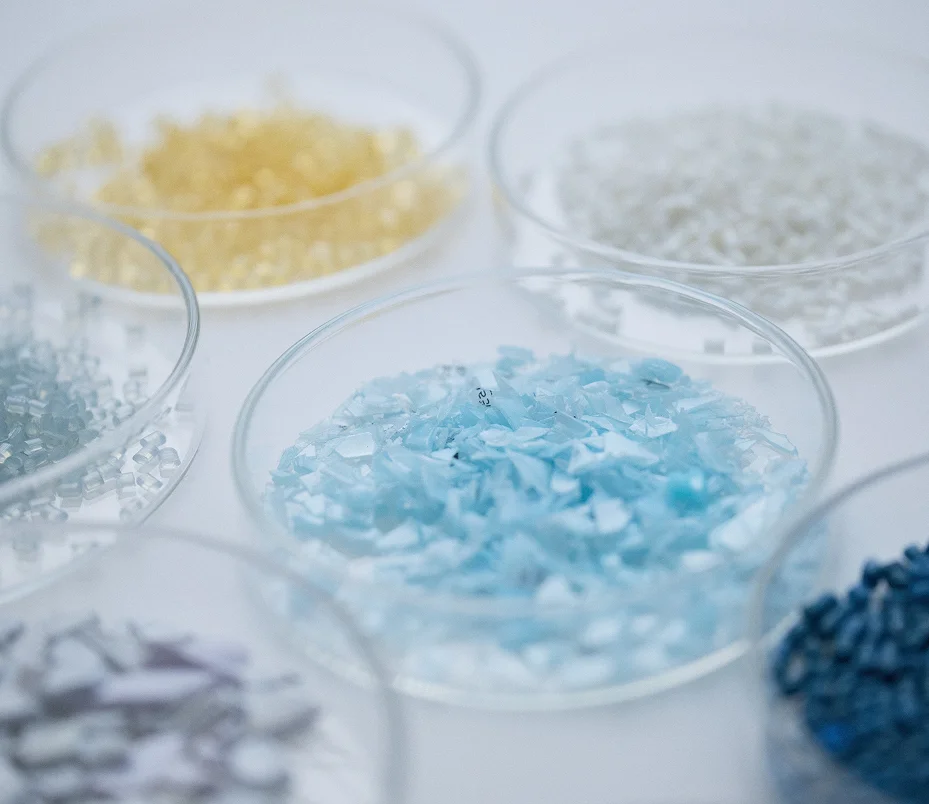
What was most impressive was their high level of expertise and reliability. When it came to selecting raw materials, even when I asked, "Do you have any recycled materials like this?", they were able to propose multiple variations, including PIR materials, PCR materials, and materials with different physical properties, and I was amazed by their ability to make suggestions. They also provided physical property data along with the samples, which made it easier not only to select raw materials but also to adjust the molding conditions.
During the prototyping process, there were quite a few urgent and irregular requests, such as "We need X kilograms by this date" or "We need an additional Y kilograms," but they always responded sincerely and promptly. We also entrusted them with discussions and coordination with partner factories regarding coloring and compounding, but I think there were difficulties unique to working with recycled materials. Furthermore, their persistent and flexible response to adjusting delivery dates to match the prototyping schedule was a great help.
Because they handled everything from procuring recycled materials and providing physical property data to compounding and adjusting delivery dates in a one-stop service, we were able to proceed with development smoothly according to the planned schedule. Thanks to them, we feel like we were able to bring the product to market somehow. It would have been difficult for us to develop raw materials and find suppliers on our own due to resource limitations, so the reassurance of having Pantech as our development partner was extremely important.
As a result, we were able to create a stool with the glossy finish and beautiful color we were aiming for, and it has been well-received by our customers.
Development using recycled materials, which will become mainstream in the future, obviously cannot be achieved without a stable supply of recycled materials. Quantity, quality, and timing—if even one of these is lacking, development will come to a halt. Securing a supply route for recycled materials is not easy to begin with, so we feel fortunate to have met Pantech , who not only supplies recycled materials but also possesses the capability and expertise to support our development process.
Beyond the WA stool—Circular manufacturing opens up new horizons
- -
The "WA stool" was unveiled at the Shinkogeisha POPUP SHOP "Shinkogei (Department Store)" held at Isetan Shinjuku in February 2026. How did you feel about seeing it actually take shape as a product?
- Mitaji
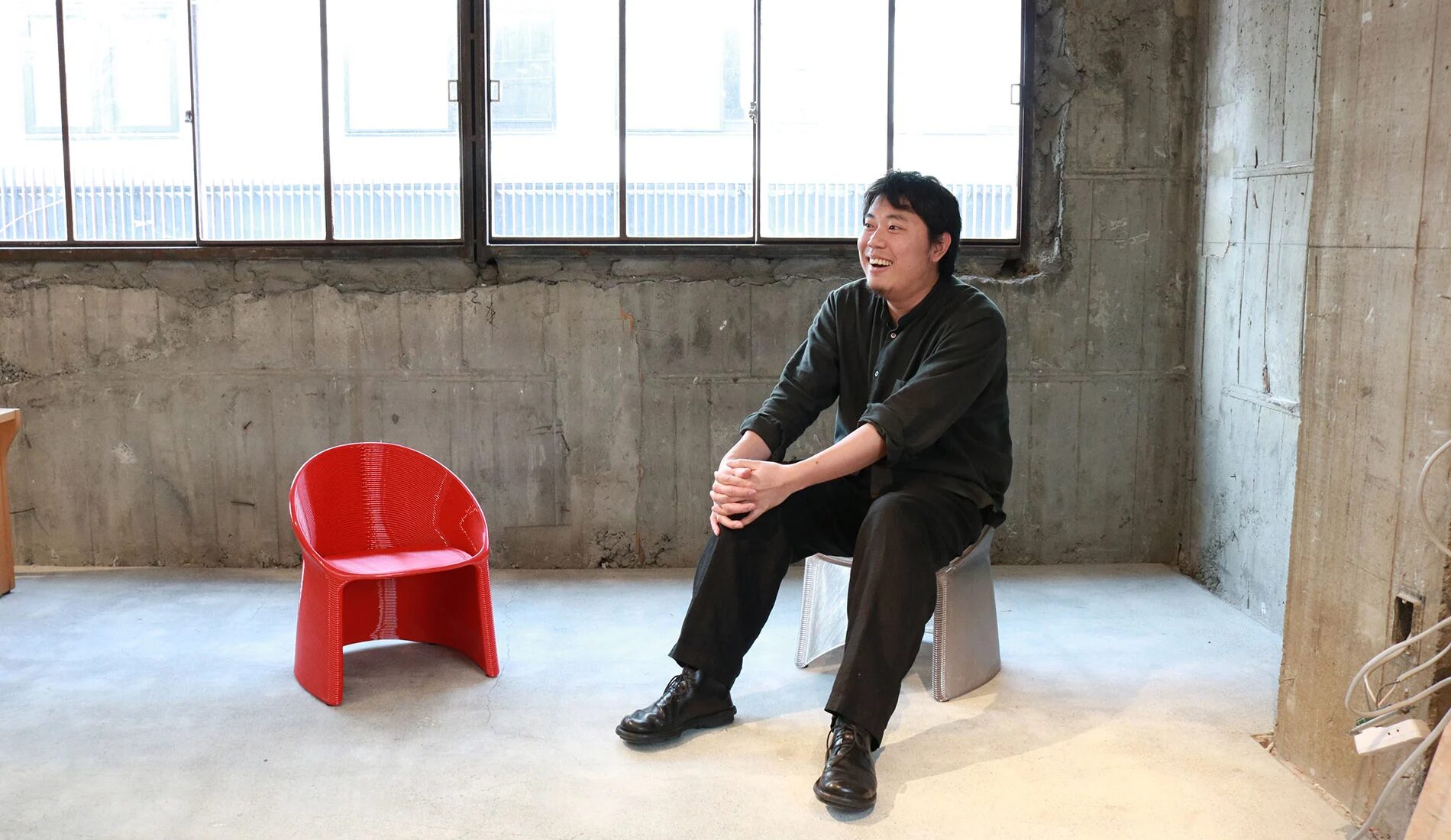
The exhibition at Isetan Shinjuku was generally well-received, and after all the hard work involved, I'm simply very happy. Thankfully, we were also able to receive orders. What surprised me was that, while I had expected inquiries from companies, many of the customers were individuals who said they wanted to put it in their own homes. Putting a 3D-printed resin chair in your own home is quite a big step, isn't it? I was truly happy that they accepted it. Some customers said things like, "I think it will be a monumental chair," and "Please be sure to include a signed certificate of authenticity," and I was grateful to receive such comments directly from customers. I hope that as we deliver these chairs to everyone, they will become a product that lives up to everyone's expectations.
- -
Are there any further challenges you'd like to take on in manufacturing using recycled materials in the future?
- Mitaji
This time it was a stool, but in the future, we would like to develop the series based on the same concept, creating lounge chairs, two-seater benches, and other items. Also, instead of making everything out of resin, we would like to consider combinations such as 3D printing the shell and using wood or metal for the legs. We think this would broaden the range of practical uses.
Having gone through this experience, I've become less resistant to using recycled materials, and ideas for reusing the resin waste generated in the lab are steadily emerging. The other day, I even made a broom out of synthetic fibers by re-thinning and bundling filaments.
Recently, I've also been working on projects other than printing. I've been making simple aluminum molds, filling them with recycled resin, and firing them to create tiles. The texture and feel change depending on the mixture, so I'm experimenting with various combinations.
- -
What are your expectations for Pantech in future co-creation projects?
- Mitaji
Our goal is to expand the 3D printing market, and we would be very grateful if you could continue to partner with us in a way that is mutually beneficial.
I believe the number of 3D printer users will continue to increase, and not only individual users but also corporations will likely enter the market. Along with this, the price of equipment should decrease, which I think will further encourage the growth of new players. In fact, pellet-type 3D printers are more widespread in Europe than in Japan, and there are many artists selling their creations made with these machines. This trend is sure to reach Japan in the near future.
As this industry grows, the demand for recycled plastic raw materials for 3D printing will likely increase. However, whether or not the next players emerge depends on the current players, including ourselves, so I would be happy if our efforts could be one of the catalysts for that.
This time, our collaboration with Pantech and Inoue Kikaku has finally taken shape, and I believe this marks the beginning of a collaboration between the three companies. There seems to be room for further development of recycled materials suitable for 3D printing, and we would like to explore the potential of using other types of resins besides the materials used this time. We hope to develop materials and products in parallel together, and simultaneously pioneer the 3D printing market and the recycled plastics market.